
Are All on 4 Dental Implants Right for You?
Blog:Are All on 4 Dental Implants Right for You?
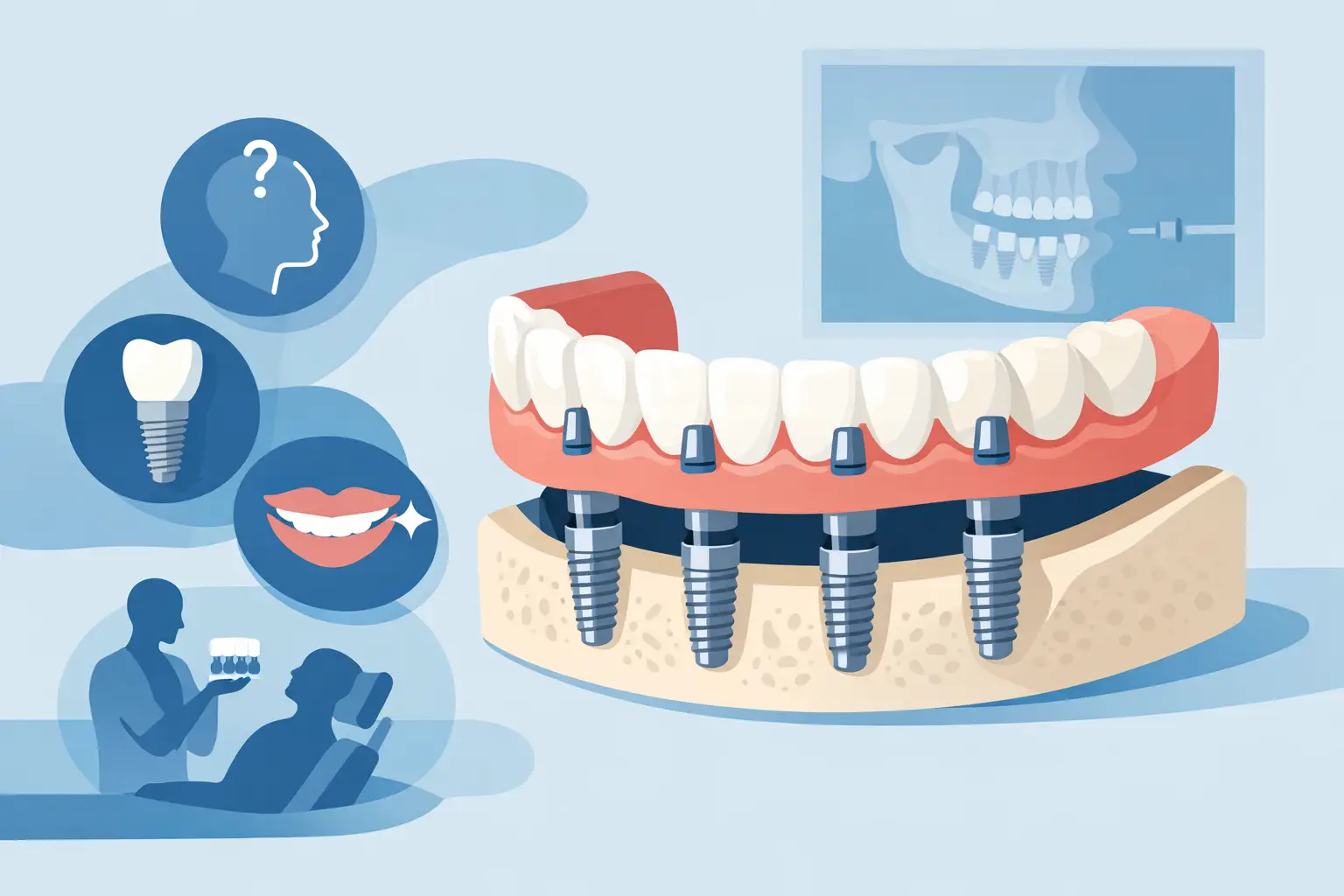
A loose denture can change more than the way you eat. It can make you avoid certain foods, cover your mouth when you laugh, or worry that your teeth will shift while you speak. For patients facing the loss of most or all teeth in an arch, all on 4 dental implants can provide a fixed, stable foundation for a new smile without placing an implant for every missing tooth.
This treatment can be life-changing, but it is also a surgical and restorative process that deserves careful planning. The strongest results come from a healthy foundation, precise implant positioning, and a long-term commitment to maintenance. Understanding what All-on-4 treatment involves can help you decide whether it is the right next step for your health and confidence.
What Are All on 4 Dental Implants?
All-on-4 is a full-arch tooth replacement approach. Four dental implants are placed in the jaw and used to support a fixed bridge that replaces an entire upper or lower set of teeth. Rather than resting on the gums like a traditional removable denture, the bridge is secured to implants anchored in the bone.
The concept is designed to make efficient use of available bone. In many cases, the two front implants are placed more vertically, while the back implants are angled to engage stronger bone and avoid certain anatomical structures. This may reduce the need for bone grafting in some patients, particularly in the back of the upper jaw or lower jaw.
That does not mean every patient can skip grafting or that four implants are always the ideal number. Bone volume, bite force, gum health, medical history, and the design of the final restoration all matter. A specialist evaluation is essential before making assumptions about the treatment path.
Why a Fixed Full-Arch Solution Feels Different
The primary benefit is stability. A fixed implant-supported bridge does not depend on adhesive, does not move against the gums in the same way as a removable denture, and can make chewing and speaking feel more natural. It also stays in place day and night, although it must still be cleaned carefully every day.
Dental implants help preserve jawbone by transmitting chewing forces into the bone. When teeth are lost, the bone that once supported them can gradually shrink. A fixed implant restoration cannot reverse all prior bone loss, but it can help protect the bone around properly integrated implants over time.
For many patients, the emotional benefit is equally meaningful. They want to stop planning meals around their teeth, stop worrying about a denture slipping, and feel comfortable in photographs and conversations. Those are valid goals. Still, a lasting result depends on treating the health issues that led to tooth loss in the first place, especially active periodontal disease or uncontrolled inflammation.
Who May Be a Candidate?
All-on-4 treatment may be considered when an entire arch has failing teeth, extensive decay, advanced gum disease, severe bone loss, or an existing denture that no longer feels functional. It can also be an option for someone whose remaining teeth are not predictable enough to justify repeated repairs.
A candidate needs more than missing teeth. The jaw must have sufficient bone in strategic areas to stabilize implants, or a treatment plan must account for grafting or an alternative implant approach. Healthy gum tissue, good oral hygiene, and a stable medical condition support healing and long-term success.
Smoking and uncontrolled diabetes can increase the risk of complications. Teeth grinding can place significant force on a full-arch bridge and may require a protective nightguard after treatment. A history of periodontal disease does not automatically rule out implants, but it does mean maintenance must be especially disciplined. Periodontal disease can affect implants too, causing inflammation and bone loss around them if plaque is not controlled.
A thorough diagnosis is not optional
A specialist should evaluate more than an X-ray and a missing-tooth count. Comprehensive planning typically includes a periodontal examination, review of your medical history, three-dimensional imaging, bite analysis, and a discussion of your goals. The shape of your jaw, the position of your sinuses and nerves, the quality of existing bone, and the way your upper and lower teeth relate all influence treatment.
This diagnostic phase is where precision care matters most. It identifies whether teeth can be saved, whether infection needs treatment before surgery, and whether a temporary restoration can be placed the same day as implant surgery. A recommendation to extract teeth should be based on prognosis, not convenience. Whenever healthy teeth can be predictably preserved, that option deserves discussion.
The All-on-4 Treatment Process
Every plan is individualized, but treatment generally begins by addressing active infection and preparing the mouth for surgery. If teeth need to be removed, extractions and implant placement may sometimes be completed during the same procedure. In appropriate cases, a temporary fixed bridge is attached soon afterward so the patient does not leave without teeth.
Immediate teeth are not the same as a final restoration. During the healing period, the implants need time to integrate with the bone. The temporary bridge is designed to protect the surgical sites while allowing you to function socially and eat a modified diet. It is not a license to resume chewing hard foods immediately.
After healing, the final bridge is designed with attention to fit, bite, strength, appearance, and cleanability. The final material may vary based on your bite, esthetic needs, available space, and budget. A well-designed restoration should look natural, but it must also allow access for hygiene around the implants and under the bridge.
Comfort and sedation during treatment
Fear of oral surgery is common, especially for patients who have spent years avoiding dentistry because of past experiences. Sedation options can help appropriate patients feel more relaxed during surgical care. Local anesthesia remains necessary to thoroughly numb the area, while sedation is selected based on health history, procedure complexity, and anxiety level.
Recovery varies. Swelling, tenderness, and temporary dietary restrictions are normal after extractions and implant placement. Most patients manage recovery with prescribed instructions, rest, and a soft-food diet. The surgical team should provide clear guidance on medications, hygiene, follow-up visits, and signs that require attention.
Important Trade-Offs to Understand
All-on-4 is not a removable denture, but it is not maintenance-free. Food particles and plaque can collect beneath the bridge. Patients need to brush thoroughly, use tools recommended by their dental team to clean under the prosthesis, and keep regular periodontal maintenance visits. The bridge may also need to be removed periodically by the dental team for professional evaluation and cleaning.
The treatment also involves a major decision if natural teeth remain. A full-arch bridge can be an excellent solution for teeth with a poor long-term prognosis, but it is irreversible once teeth are extracted. Some patients are better served by treating gum disease, saving strategic teeth, or using a different implant-supported design.
Cost is another practical consideration. The fee reflects surgical planning, imaging, extractions when needed, implants, temporary and final restorations, laboratory work, follow-up care, and the expertise of the clinical team. Comparing quotes without comparing the diagnosis, materials, implant system, provisional plan, and maintenance expectations can lead to misunderstandings. The least expensive option is not always the best value if it compromises health, fit, or long-term serviceability.
Protecting Your Investment for the Long Term
Implant success is built over years, not just the day a bridge is delivered. Daily hygiene, professional maintenance, a healthy lifestyle, and attention to bite changes all help protect the bone and tissues around implants. If you clench or grind, wearing a nightguard can help reduce damaging forces.
Watch for bleeding, swelling, persistent bad taste, looseness, changes in your bite, or discomfort around an implant bridge. These symptoms do not always mean implant failure, but they should be assessed promptly. Early treatment for inflammation or mechanical problems is usually simpler than waiting for a complication to progress.
At Bita Farhoumand, DDS, full-arch implant planning is approached with the same priority given to every periodontal procedure: preserve health first, place implants with precision, and create a result that is designed to function for the long term. If you are considering a fixed full-arch solution, the most helpful next step is a comprehensive evaluation that gives you a clear picture of your options, not just a quick answer.
Quick Links
Helpful Articles
article_category: products
article_category: psychiatry
article_category: faqs
article_category: cats
article_category: general
article_category: services
article_category: technology
article_category: dogs
article_category: restorative
article_category: vision therapy
article_category: contact lenses
article_category: health
article_category: conditions
article_category: eye surgery co-management
article_category: exotic
article_category: cosmetic
article_category: surgical procedures
article_category: aesthetics
article_category: preventative
article_category: ocular disease management
article_category: eyeglasses
article_category: eye health
article_category: large animal
[]
article_category: psychiatry
article_category: faqs
article_category: cats
article_category: general
article_category: services
article_category: technology
article_category: dogs
article_category: restorative
article_category: vision therapy
article_category: contact lenses
article_category: health
article_category: conditions
article_category: eye surgery co-management
article_category: exotic
article_category: cosmetic
article_category: surgical procedures
article_category: aesthetics
article_category: preventative
article_category: ocular disease management
article_category: eyeglasses
article_category: eye health
article_category: large animal
[]
Flowbite is an open-source library of interactive components built on top of Tailwind CSS including buttons, dropdowns, modals, navbars, and more.
Check out this guide to learn how to get started and start developing websites even faster with components on top of Tailwind CSS.
All Dental Services
We offer a wide variety of dental services to the Encinitas community. Contact us with any questions about our services.

Keep In Touch
For non-urgent questions or to learn more about our services, contact us today!
© 2026 Bita Farhoumand, DDS. All rights Reserved - Accessibility Statement - Privacy Policy - Sitemap
Managed and Designed by 