Tooth Extraction with Socket Preservation Grafting
To protect against the loss of bone, Dr. Farhoumand will take special precautions to protect the surrounding bone during every tooth extraction procedure. Our goal is to preserve as much of your surrounding jawbone as possible to help you support a dental implant in the future.
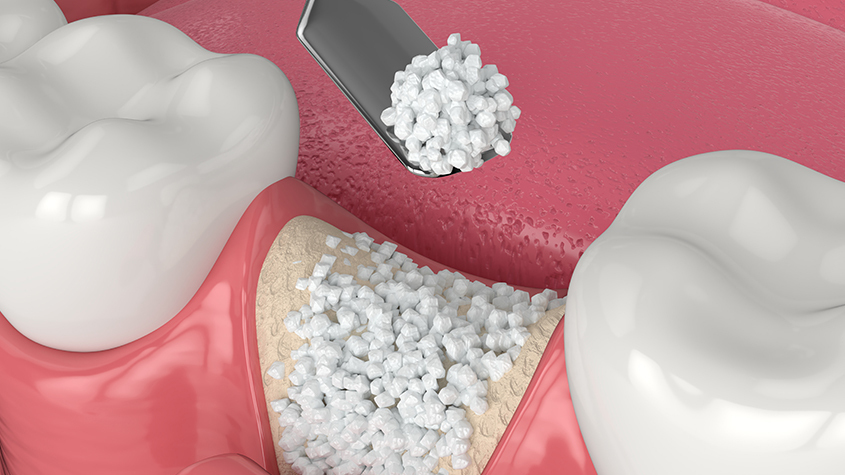
Following tooth removal, artificial bone is placed into the socket to prevent any bone loss and jaw atrophy that naturally wants to occur when a tooth is removed. This bone helps prevent a patient’s jaw from atrophying in the short and long term, providing more bone volume for implant placement. It also prevents patients from running into problems such as needing additional, more invasive bone grafting procedures, implant loss, or inability to place an implant due to lack of available jawbone.
Ridge Augmentation
A ridge augmentation is a procedure that is performed at an already healed tooth extraction site that did not receive a bone graft at the time of the tooth extraction. This can lead to a lack of bone quantity either horizontally or vertically, which has prevented the placement of an implant. This procedure recreates the natural contour of the jawbone and gums overlying the missing tooth site that has been planned for an implant.
Sinus Lifts
If you need to have one or more dental implants placed in your upper jaw but have been told you don’t have enough bone because of large sinus cavities, you may benefit from a sinus lift procedure. During a sinus lift, Dr. Farhoumand will create a tiny opening from inside your mouth and pack in some grafting material around the area where you plan to have your implant placed. Depending on how much bone is available at the time of your procedure, we may choose to place your implant at the same time, or we may wait until the area has healed
Guided Bone Regeneration
Guided bone regeneration can help a patient recover parts of the jaw previously lost to gum disease so it becomes strong enough to support dental implants. For this, the grafting material is paired with a matrix that serves as a map for where the new growth needs to happen. This increased precision ensures that a patient regains bone right where they need it most, which speeds up the process while also greatly increasing the long-term success of their new tooth/teeth once they are placed.