
Bone Grafting for Dental Implants Explained
Blog:Bone Grafting for Dental Implants Explained
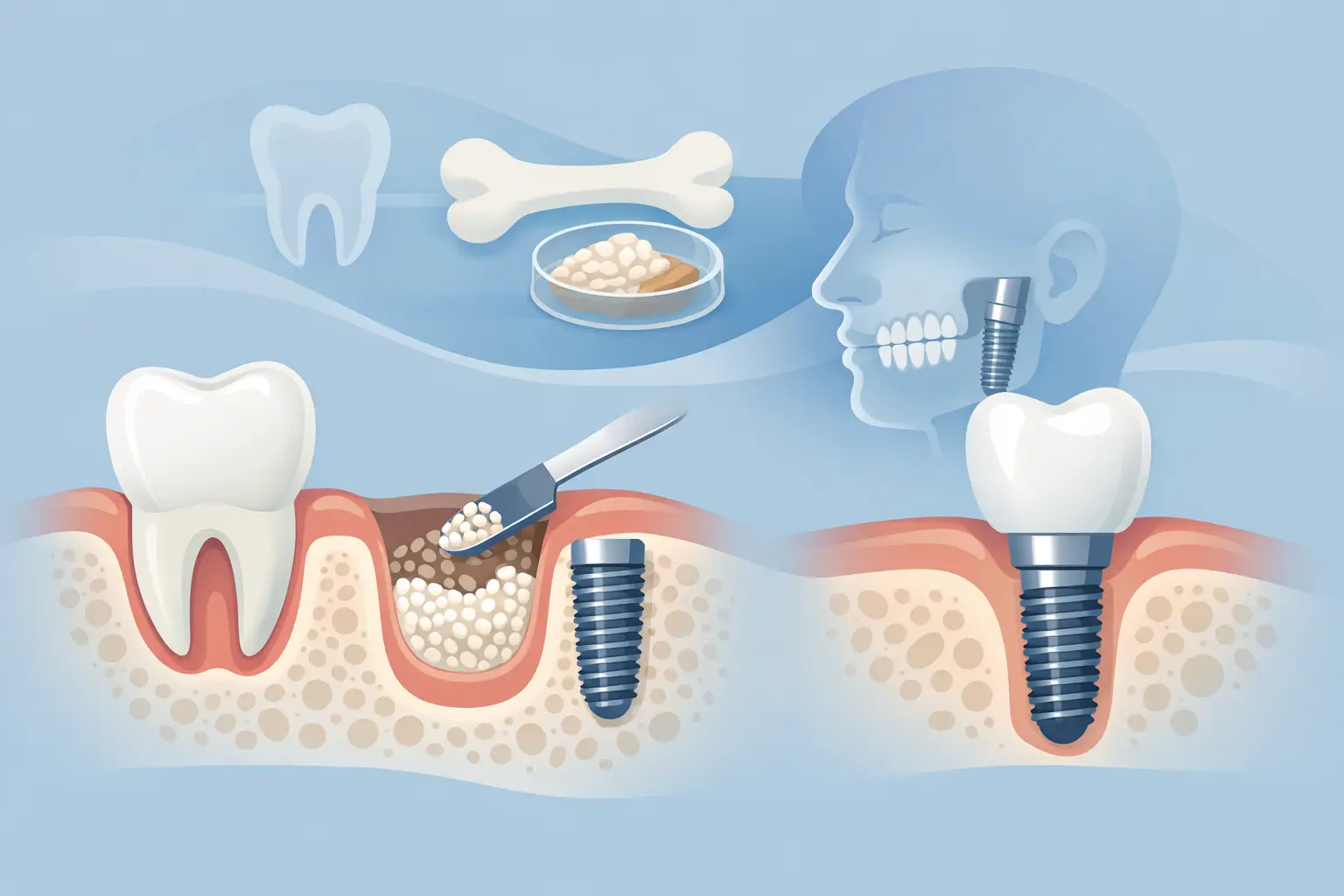
When a patient is told they need a dental implant but do not have enough jawbone to support it, the next question is usually immediate and practical: Can this still be fixed? In many cases, the answer is yes. Bone grafting for dental implants is a proven way to rebuild lost bone, create a stable foundation, and make long-term implant success much more predictable.
For many adults, bone loss happens quietly. A missing tooth, advanced gum disease, infection, trauma, or even years of denture wear can cause the jawbone to shrink over time. By the time someone is ready to replace a tooth, there may not be enough healthy bone left to hold an implant securely. That does not always mean the implant is off the table. It means the site may need to be rebuilt first.
Why bone matters before implant placement
A dental implant functions like an artificial tooth root. It is placed into the jawbone, where it needs enough surrounding bone to integrate properly and remain stable under chewing forces. If the bone is too thin, too soft, or too shallow, the implant may not have the support it needs.
This is where specialist evaluation becomes essential. Adequate bone is not just about quantity. Quality matters too. The shape of the defect, the health of the gums, the location of nearby anatomical structures, and whether infection or gum disease is still active all influence the treatment plan.
Bone grafting is designed to restore that missing foundation. In some cases, only a small amount of grafting is needed. In others, the reconstruction is more involved and staged over time. The right approach depends on the extent of bone loss and the final restorative goal.
What bone grafting for dental implants actually involves
Bone grafting for dental implants is a surgical procedure that adds bone material to an area where the jaw has lost volume. The graft acts as a scaffold and support for new bone growth. Over time, your body replaces or integrates with the grafted material, strengthening the site for future implant placement.
There is no single version of bone grafting. A small socket preservation graft may be done immediately after a tooth extraction to help prevent collapse of the ridge. A ridge augmentation procedure may rebuild a narrow or sunken area where a tooth has been missing for years. In the upper back jaw, a sinus lift may be recommended when the sinus cavity limits available bone height.
The timing can vary. Some patients receive a graft first and return later for implant placement after healing. Others may be candidates for grafting and implant placement at the same visit if the anatomy and stability allow it. That decision should be based on careful imaging and clinical judgment, not convenience.
When a bone graft may be recommended
A graft is commonly recommended when bone loss would compromise implant stability or long-term function. That may happen after tooth loss, especially if the area has been empty for months or years. It is also common in patients with a history of periodontal disease, since the infection that affects the gums can also destroy supporting bone.
Some patients are surprised to learn they need grafting even when they have worn a partial or denture for years without major problems. The issue is that removable appliances do not preserve bone in the way a natural tooth root or a well-integrated implant can. Over time, the jaw can continue to resorb, which changes both support and facial contours.
A graft may also be recommended when removing a failing implant. If an implant has lost surrounding bone because of infection or biomechanical stress, the area may need to be regenerated before another implant can be placed safely.
Types of graft materials and why the choice matters
Patients often ask whether the graft comes from their own body or from another source. The answer is that several graft materials may be appropriate, and each has advantages depending on the clinical situation.
Autogenous grafts use the patient’s own bone. These can be highly effective because they contain living cells and natural growth potential, but they may require a second surgical site. Other grafts may come from donor bone or highly processed biocompatible materials that support new bone formation. In some cases, synthetic materials are used.
The best choice depends on the size and location of the defect, the need for structural support, overall health, and the treatment timeline. A skilled periodontist or implant specialist selects materials based on what will create the most predictable result, not a one-size-fits-all formula.
Healing time and what to expect after surgery
Healing after bone grafting is usually more manageable than patients expect, especially when the procedure is carefully planned and performed with attention to tissue handling and comfort. Most patients can return to normal daily activities quickly, although they should follow specific instructions about diet, brushing, medications, and activity.
The healing timeline depends on the type of graft and the amount of regeneration needed. A smaller graft may mature in a few months, while larger or more complex cases can take longer. During that time, the site is developing the strength and density needed to support an implant properly.
It is worth remembering that faster is not always better. Placing an implant too soon in a site that has not matured adequately can increase risk. In specialty care, the goal is not simply to place the implant. The goal is to place it into the best possible environment for long-term success.
Is bone grafting always necessary?
No. Some patients have enough healthy bone for immediate implant placement without any additional regenerative procedure. Others may need only minor grafting at the time of implant surgery. Still others require more substantial rebuilding before the implant can even be considered.
This is why advanced imaging and a comprehensive periodontal evaluation matter so much. Two patients with the same missing tooth can have very different treatment needs. One may be ready for an implant now. Another may need to address active gum disease, remove infection, or regenerate bone first.
That difference is not a setback. It is part of precision treatment planning.
The benefits of a well-planned graft
When bone grafting is recommended appropriately, it can do much more than make implant placement possible. It can improve implant positioning, support healthier gum contours, and help the final restoration look and function more naturally.
This matters because an implant is not judged only by whether it stays in place. It should also feel comfortable, clean well, handle normal chewing forces, and support surrounding tissues over time. If the underlying bone is inadequate, the implant may end up in a compromised position or carry unnecessary risk.
A well-executed graft can also preserve future options. Even if the patient is not ready for implant placement immediately, maintaining bone volume now may help avoid more complex treatment later.
Choosing the right specialist for bone grafting for dental implants
Not every implant case is straightforward, and not every provider has the same training in periodontal regeneration and surgical bone management. Bone grafting for dental implants should be approached with a clear understanding of both implant dentistry and the biology of the surrounding tissues.
That is especially important in patients with a history of gum disease, prior implant failure, advanced bone loss, or cosmetic concerns in visible areas of the smile. A board-certified periodontist brings specialized expertise in bone and soft-tissue regeneration, implant placement, and management of the conditions that often lead to bone loss in the first place.
For patients in North County San Diego who want treatment that prioritizes long-term function and surgical precision, that level of specialty care can make a meaningful difference. At a practice like Bita Farhoumand, DDS, treatment planning is built around what will support lasting oral health, not just what works in the short term.
Common concerns patients have
One of the biggest concerns is discomfort. Most patients tolerate grafting well, especially with thoughtful anesthesia, sedation options when appropriate, and clear post-operative guidance. Another concern is whether the procedure is worth the extra time. In many cases, the answer is yes, because rebuilding the site properly helps protect the investment in the implant itself.
Cost is another real factor. Bone grafting does add to treatment complexity, but avoiding necessary grafting can lead to a weaker foundation and greater risk of complications later. The question is not simply whether a graft costs more now. It is whether skipping it creates a less stable result.
There are also situations where grafting may not be the best path, particularly if a patient has significant medical factors, uncontrolled periodontal disease, or anatomical limitations that require a different solution. A trustworthy specialist will explain those trade-offs clearly.
If you have been told you do not have enough bone for an implant, that is not the end of the conversation. With the right diagnosis and surgical planning, rebuilding support may be the step that turns an uncertain case into a successful one.
Quick Links
Helpful Articles
article_category: products
article_category: psychiatry
article_category: faqs
article_category: cats
article_category: general
article_category: services
article_category: technology
article_category: dogs
article_category: restorative
article_category: vision therapy
article_category: contact lenses
article_category: health
article_category: conditions
article_category: eye surgery co-management
article_category: exotic
article_category: cosmetic
article_category: surgical procedures
article_category: aesthetics
article_category: preventative
article_category: ocular disease management
article_category: eyeglasses
article_category: eye health
article_category: large animal
[]
article_category: psychiatry
article_category: faqs
article_category: cats
article_category: general
article_category: services
article_category: technology
article_category: dogs
article_category: restorative
article_category: vision therapy
article_category: contact lenses
article_category: health
article_category: conditions
article_category: eye surgery co-management
article_category: exotic
article_category: cosmetic
article_category: surgical procedures
article_category: aesthetics
article_category: preventative
article_category: ocular disease management
article_category: eyeglasses
article_category: eye health
article_category: large animal
[]
Flowbite is an open-source library of interactive components built on top of Tailwind CSS including buttons, dropdowns, modals, navbars, and more.
Check out this guide to learn how to get started and start developing websites even faster with components on top of Tailwind CSS.
All Dental Services
We offer a wide variety of dental services to the Encinitas community. Contact us with any questions about our services.

Keep In Touch
For non-urgent questions or to learn more about our services, contact us today!
© 2026 Bita Farhoumand, DDS. All rights Reserved - Accessibility Statement - Privacy Policy - Sitemap
Managed and Designed by 