
Dental Implant Revision: When an Implant Needs Help
Blog:Dental Implant Revision: When an Implant Needs Help
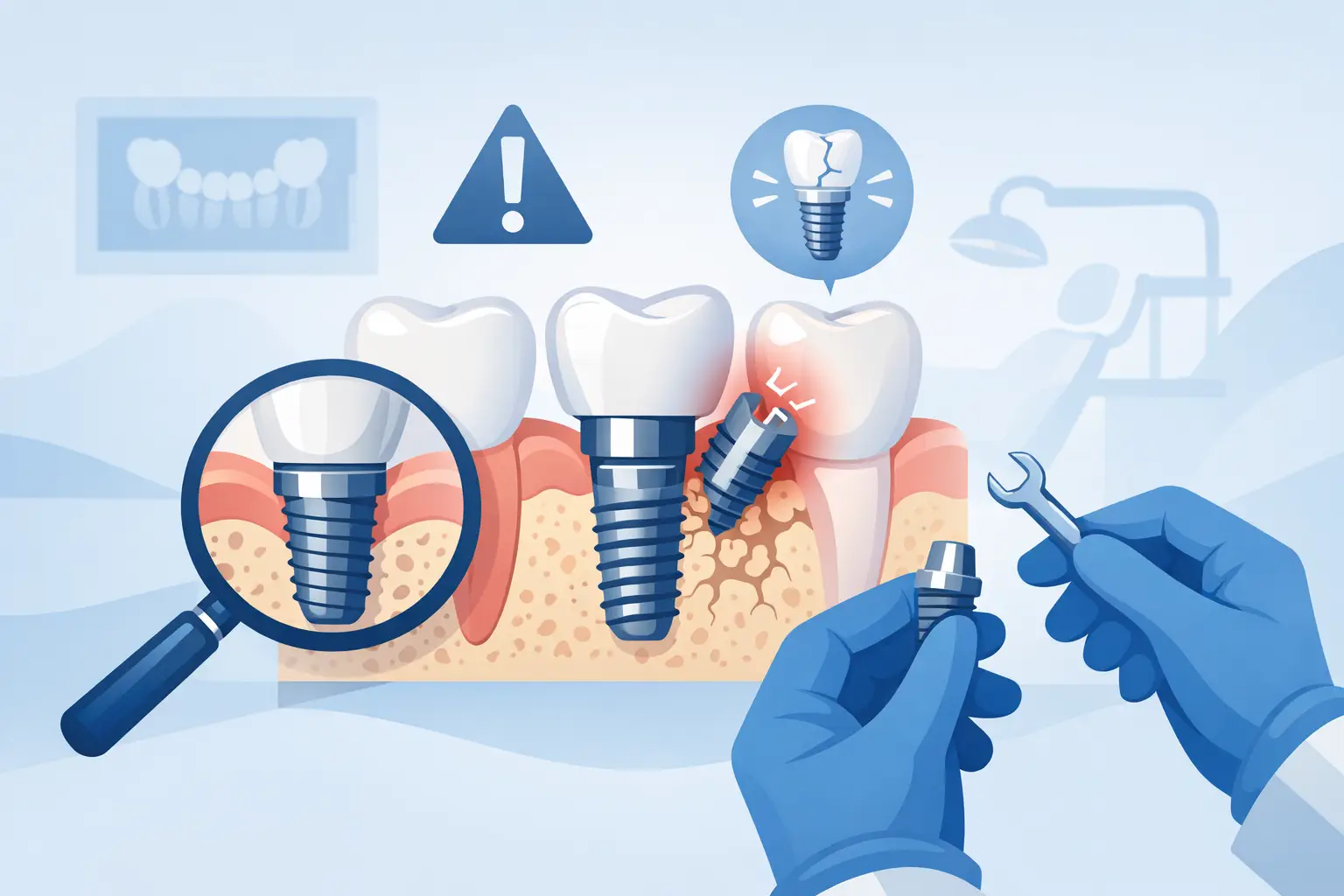
A dental implant should feel and function like a dependable part of your smile. When it becomes painful, loose, swollen, difficult to clean, or cosmetically disappointing, the concern deserves more than a quick repair. Dental implant revision is a specialized process used to diagnose and correct problems affecting an implant, the surrounding gum tissue, the supporting bone, or the restoration attached to it.
For patients in Encinitas and North County San Diego, the goal is not simply to make an implant look better for the moment. It is to identify why it is struggling and develop a treatment plan that protects oral health, comfort, and long-term function. In some cases, a compromised implant can be stabilized and maintained. In others, removal and site reconstruction may offer the most predictable path forward.
What Is Dental Implant Revision?
Dental implant revision refers to treatment performed when an existing implant or implant restoration is not functioning as intended. The term can describe a range of care, from replacing a loose crown or correcting the bite to treating infection around the implant, rebuilding lost bone, or removing a failed implant and preparing the area for a future replacement.
An implant has several parts: the implant body placed in the jawbone, the connector that supports the restoration, and the visible crown, bridge, or denture. A problem in one area does not always mean the entire implant has failed. For example, a worn or fractured crown may be repaired or replaced while the implant itself remains healthy and stable.
The more complex cases involve the tissues supporting the implant. Infection and inflammation around an implant, known as peri-implant disease, can cause bleeding, swelling, bone loss, and eventually mobility. Because bone loss around an implant can progress quietly, early evaluation is especially valuable.
Signs Your Implant May Need Specialist Attention
An implant does not need to be severely painful to require care. In fact, many patients first notice subtle changes: bleeding when brushing, a bad taste, tenderness in the gum tissue, or a crown that suddenly feels different when chewing. These symptoms are not normal signs of aging and should be evaluated promptly.
Other concerns may include gum recession that exposes metal, pus or drainage, a loose crown or bridge, a clicking sensation, difficulty biting evenly, or an implant that feels mobile. Mobility can indicate a serious issue with the implant itself, although a loose restoration can sometimes create a similar sensation. A careful examination distinguishes between these possibilities.
Appearance can also be a valid reason to seek revision. Receding gums, uneven gum contours, dark show-through near the gumline, or an implant crown that no longer matches adjacent teeth can affect confidence. Cosmetic concerns should still be approached with biological health in mind. Changing a crown without addressing inflammation, thin tissue, or bone loss may create a temporary improvement without resolving the underlying issue.
Why Implants Can Develop Problems
Dental implants have high success rates, but success depends on several factors over time. Gum disease, plaque accumulation, smoking or vaping, uncontrolled diabetes, grinding or clenching, and inconsistent professional maintenance can increase the risk of complications. Some patients are also predisposed to inflammation because of a history of periodontal disease.
Mechanical issues are different from biological ones. A loose screw, cracked crown, poorly balanced bite, or restoration design that makes cleaning difficult can place stress on the implant system. These problems may be correctable without implant removal, but they require precise diagnosis. An implant that is overloaded because of clenching, for instance, may need bite adjustment and protective treatment in addition to restoration repair.
The original implant position also matters. If there is limited bone, thin gum tissue, or an implant placed at an angle that complicates cleaning and restoration design, revision can be more involved. This does not automatically mean the implant cannot be saved. It does mean treatment should be planned by a clinician who can evaluate the bone, soft tissue, bite, and restoration together.
How a Dental Implant Revision Is Planned
A meaningful evaluation begins with listening. Your specialist will want to know when the implant was placed, whether symptoms developed gradually or suddenly, and whether you have experienced prior gum disease, grinding, medical changes, or difficulty keeping the area clean.
The clinical examination typically assesses gum inflammation, pocket depths around the implant, bleeding, recession, the quality of the surrounding tissue, bite forces, and whether the restoration is secure. Diagnostic imaging is often necessary to assess bone levels and implant position. In more complex cases, three-dimensional imaging can provide critical information about the bone and nearby structures.
This evaluation helps answer the question patients understandably ask first: Can the implant be saved? The answer depends on the extent and pattern of bone loss, implant stability, infection control, restoration design, and the health of the surrounding tissues. A precise diagnosis prevents unnecessary removal when a conservative approach is appropriate, while avoiding repeated repairs when the foundation is no longer predictable.
Treatment Options Depend on the Cause
When the implant is healthy but the crown, bridge, or denture is loose or damaged, treatment may focus on the restoration. The clinician may tighten or replace a component, repair the prosthesis, improve the bite, or redesign the restoration so it can be cleaned more effectively.
For peri-implant inflammation caught early, professional decontamination and a focused home-care plan may help control the condition. More advanced infection with bone loss may require surgical access to clean the implant surface, reduce inflammation, and evaluate whether regenerative treatment is appropriate. The possibility of rebuilding lost bone depends on the defect pattern, the implant’s stability, and the ability to establish a healthy, maintainable environment afterward.
When removal is the best recommendation, it is not a failure of care. It is a decision made to protect the jawbone and avoid allowing infection to progress. After careful implant removal, the site may need bone grafting and time to heal before a new implant is considered. In some situations, a replacement implant can be placed sooner; in others, staged treatment offers a more secure result. The timeline should be based on healing and predictability, not a one-size-fits-all schedule.
Soft-tissue grafting may also play an important role. Healthy, resilient gum tissue around an implant can improve comfort, reduce recession risk, and make daily cleaning easier. For patients with thin tissue or visible recession, this step can be as important to long-term stability as the bone itself.
Why Periodontal Expertise Matters in Revision Cases
Implant revision often involves more than replacing a dental part. It requires an understanding of infection control, bone biology, gum architecture, surgical technique, and how restorative forces affect the implant over time. A board-certified periodontist brings advanced training in the hard and soft tissues that support teeth and implants.
At Bita Farhoumand, DDS, revision care is approached with precision at every level. That means looking beyond the immediate symptom and coordinating treatment around the factors that will influence lasting success. For anxious patients, options such as sedation can also help make surgical care more manageable and comfortable.
No clinician can promise that every compromised implant can be saved. What a specialist can provide is a clear assessment, thoughtful options, and a recommendation grounded in the health of the entire site rather than a temporary cosmetic fix.
Protecting a Repaired or Replacement Implant
After revision treatment, consistent maintenance becomes part of the investment in your smile. Implants cannot develop cavities, but the gum and bone around them remain vulnerable to inflammation and infection. Regular periodontal maintenance, effective home cleaning, and prompt attention to bleeding or soreness are essential.
If you clench or grind your teeth, a night guard or bite-management plan may protect the implant and restoration from repeated excess force. Smoking cessation and good control of systemic conditions, including diabetes, can also improve healing and reduce risk. Your maintenance schedule should reflect your personal history, not just a standard calendar reminder.
If an implant feels different, bleeds, or becomes difficult to clean, trust that signal. An early specialist evaluation can often preserve more treatment options, more supporting bone, and more peace of mind.
Quick Links
Helpful Articles
article_category: products
article_category: psychiatry
article_category: faqs
article_category: cats
article_category: general
article_category: services
article_category: technology
article_category: dogs
article_category: restorative
article_category: vision therapy
article_category: contact lenses
article_category: health
article_category: conditions
article_category: eye surgery co-management
article_category: exotic
article_category: cosmetic
article_category: surgical procedures
article_category: aesthetics
article_category: preventative
article_category: ocular disease management
article_category: eyeglasses
article_category: eye health
article_category: large animal
[]
article_category: psychiatry
article_category: faqs
article_category: cats
article_category: general
article_category: services
article_category: technology
article_category: dogs
article_category: restorative
article_category: vision therapy
article_category: contact lenses
article_category: health
article_category: conditions
article_category: eye surgery co-management
article_category: exotic
article_category: cosmetic
article_category: surgical procedures
article_category: aesthetics
article_category: preventative
article_category: ocular disease management
article_category: eyeglasses
article_category: eye health
article_category: large animal
[]
Flowbite is an open-source library of interactive components built on top of Tailwind CSS including buttons, dropdowns, modals, navbars, and more.
Check out this guide to learn how to get started and start developing websites even faster with components on top of Tailwind CSS.
All Dental Services
We offer a wide variety of dental services to the Encinitas community. Contact us with any questions about our services.

Keep In Touch
For non-urgent questions or to learn more about our services, contact us today!
© 2026 Bita Farhoumand, DDS. All rights Reserved - Accessibility Statement - Privacy Policy - Sitemap
Managed and Designed by 