
Gum Recession Treatment Options That Protect Teeth
Blog:Gum Recession Treatment Options That Protect Teeth
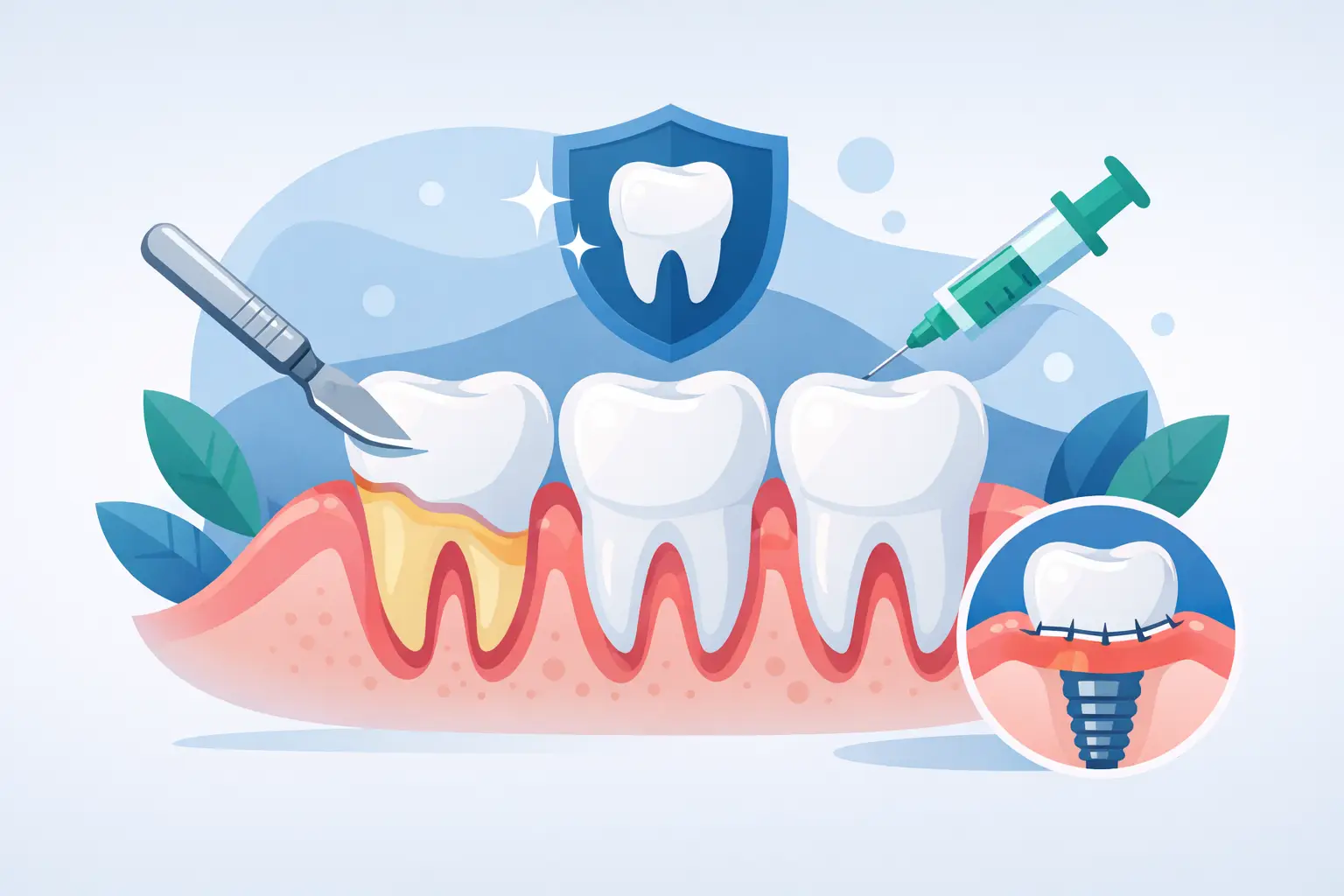
A tooth can be perfectly healthy and still look longer than it used to. When the gumline pulls away, the newly exposed root surface may feel sensitive to cold water, look uneven in a smile, and become more vulnerable to decay. The right gum recession treatment options depend on why the tissue receded, how much support remains around the tooth, and whether the problem is still progressing.
Recession is not simply a cosmetic concern. Gum tissue protects the roots of the teeth, and roots do not have the same hard enamel covering found on the visible crown. A careful periodontal evaluation can identify the cause and determine whether conservative care, gum grafting, or treatment for underlying gum disease offers the best long-term protection.
What Causes Gum Recession?
Gum recession is often gradual, which makes it easy to overlook until sensitivity or visible root exposure becomes noticeable. Periodontal disease is a leading cause. Infection beneath the gumline can damage the connective tissue and bone that hold teeth in place, allowing the gumline to migrate downward over time.
Other causes can be just as significant. Brushing aggressively with a hard-bristled brush, using an improper brushing technique, clenching or grinding, tobacco use, naturally thin gum tissue, and teeth positioned outside the bony housing can all contribute. Orthodontic movement may also reveal a preexisting thin tissue or bone condition in some patients.
This is why a one-size-fits-all approach is not appropriate. Covering a recessed area without addressing active inflammation, traumatic brushing, or bite forces may not produce a stable result.
When Recession Needs More Than Home Care
A soft toothbrush, gentler technique, prescription-strength fluoride, and desensitizing toothpaste can reduce discomfort and help protect exposed roots. These measures are valuable, but they do not regrow lost gum tissue. They are most useful when recession is mild, stable, and not caused by active periodontal disease.
An examination with a periodontist is especially appropriate when recession is worsening, roots are visibly exposed, teeth feel loose, gums bleed, or there is a history of bone loss. Measurements around each tooth, an assessment of tissue thickness, bite evaluation, and appropriate imaging help determine what is happening below the visible gumline.
For patients in Encinitas, Carlsbad, Vista, and surrounding North County communities, that level of assessment matters. A tooth that appears to need a cosmetic fix may actually need infection control, regenerative treatment, or protection from continued mechanical trauma.
Gum Recession Treatment Options Based on the Cause
Professional cleaning and periodontal therapy
If plaque, tartar, and inflammation are contributing to recession, treatment begins by controlling the disease process. Scaling and root planing removes bacterial deposits from beneath the gums and smooths root surfaces so the tissue can heal more effectively. For appropriate cases, advanced laser periodontal therapy such as LANAP may be used to address infected tissue with a minimally invasive approach.
The goal is to reduce inflammation and preserve the bone and tissue that remain. While periodontal therapy cannot always restore a receded gumline, it can stop or slow the damage that would otherwise continue.
Changing habits that traumatize the gums
When recession is linked to brushing pressure or technique, a clinician may recommend an ultra-soft brush, a powered brush with a pressure sensor, and a gentler angle along the gumline. This is not a minor detail. Repeated pressure in the same area can continue to wear away thin tissue, even after other treatment is completed.
If clenching or grinding is present, a custom night guard or bite adjustment may be part of the plan. Addressing these forces helps protect both natural teeth and any future restorative work.
Restoring exposed root surfaces
For small, stable areas of recession, a tooth-colored bonded restoration may cover a worn or decayed root surface. This can improve sensitivity and appearance, particularly where the root has developed a notch from abrasion or erosion.
A restoration is not the same as rebuilding gum tissue. It may be a practical choice for a shallow defect or a patient who is not a candidate for surgery, but it does not address thin tissue, bone loss, or disease below the gumline.
Gum grafting for lasting root coverage
Soft-tissue grafting is often the most predictable treatment when recession is significant, progressing, or creating sensitivity and esthetic concerns. During a graft, a periodontist strengthens the area with the patient's own tissue, donor tissue, or a carefully selected regenerative material. The tissue is positioned to thicken the gumline and, when anatomy allows, cover exposed roots.
The benefits extend beyond appearance. A thicker, more resilient gumline can make brushing more comfortable, reduce root sensitivity, and create a better protective seal around the tooth. Success depends on the location of the recession, the amount of bone between teeth, root position, tissue quality, and the patient's ability to control inflammation during healing.
Some patients need treatment around one highly visible tooth. Others have multiple areas of thinning tissue, often near lower front teeth or around teeth that have shifted outward. A specialist can determine whether treatment should focus on a single site or be planned more comprehensively.
Regenerative treatment when bone loss is involved
When gum recession is accompanied by periodontal bone loss, soft-tissue grafting alone may not be enough. Certain defects may benefit from bone grafting, barrier membranes, or biologic materials designed to support regeneration of lost periodontal support.
Not every bone defect can be regenerated, and no responsible clinician should promise that it can. The shape and severity of the defect, bacterial control, smoking status, medical history, and daily home care all influence what is possible. Still, treating the underlying support can be critical to preserving a compromised tooth.
Treatment around implants
Recession can also occur around dental implants. Because implants do not respond exactly like natural teeth, implant recession requires a different evaluation. It may involve thin tissue, an implant positioned too far toward the lip or cheek, bone loss, or peri-implant disease.
Prompt care is especially important if an implant has bleeding, swelling, drainage, or visible threads. Depending on the cause, treatment may involve infection control, laser therapy, soft-tissue augmentation, regenerative procedures, or a carefully planned revision. Early intervention offers the best chance to protect the implant and surrounding bone.
What to Expect From a Periodontal Consultation
A consultation should provide more than a recommendation for surgery. It should clarify whether recession is active, identify factors that could undermine treatment, and explain the expected outcome for each tooth. Photographs and measurements can establish a baseline, making it easier to monitor changes over time.
If grafting is recommended, the treatment plan should address comfort as well as clinical precision. Local anesthesia is standard, and sedation may be available for patients with significant dental anxiety or more extensive procedures. Healing commonly involves temporary dietary adjustments and careful cleaning instructions while the tissue matures.
The best result is not always complete root coverage. In some cases, the realistic goal is to halt progression, reduce sensitivity, increase tissue thickness, and protect the tooth for the future. Honest treatment planning is part of high-quality specialty care.
Choosing the Right Time to Act
Waiting can allow a small area of recession to become a larger and more complex problem. That does not mean every recessed gumline requires immediate surgery. Stable, mild recession may be managed conservatively with monitoring and improved home care. Progressive recession, active gum disease, root decay, or thinning tissue deserves timely attention.
At Bita Farhoumand, DDS, treatment planning centers on preserving healthy teeth and creating stable support, not applying a temporary cosmetic fix. A board-certified periodontist can help determine which approach gives your smile the strongest foundation.
If your teeth look longer, brushing has become uncomfortable, or you have been told you have gum loss, a periodontal evaluation can replace uncertainty with a clear plan. Protecting the gumline early may be one of the most meaningful steps you can take to keep your natural teeth comfortable, functional, and healthy.
Quick Links
Helpful Articles
article_category: products
article_category: psychiatry
article_category: faqs
article_category: cats
article_category: general
article_category: services
article_category: technology
article_category: dogs
article_category: restorative
article_category: vision therapy
article_category: contact lenses
article_category: health
article_category: conditions
article_category: eye surgery co-management
article_category: exotic
article_category: cosmetic
article_category: surgical procedures
article_category: aesthetics
article_category: preventative
article_category: ocular disease management
article_category: eyeglasses
article_category: eye health
article_category: large animal
[]
article_category: psychiatry
article_category: faqs
article_category: cats
article_category: general
article_category: services
article_category: technology
article_category: dogs
article_category: restorative
article_category: vision therapy
article_category: contact lenses
article_category: health
article_category: conditions
article_category: eye surgery co-management
article_category: exotic
article_category: cosmetic
article_category: surgical procedures
article_category: aesthetics
article_category: preventative
article_category: ocular disease management
article_category: eyeglasses
article_category: eye health
article_category: large animal
[]
Flowbite is an open-source library of interactive components built on top of Tailwind CSS including buttons, dropdowns, modals, navbars, and more.
Check out this guide to learn how to get started and start developing websites even faster with components on top of Tailwind CSS.
All Dental Services
We offer a wide variety of dental services to the Encinitas community. Contact us with any questions about our services.

Keep In Touch
For non-urgent questions or to learn more about our services, contact us today!
© 2026 Bita Farhoumand, DDS. All rights Reserved - Accessibility Statement - Privacy Policy - Sitemap
Managed and Designed by 