
How Bone Grafting Supports Implants for Lasting Results
Blog:How Bone Grafting Supports Implants for Lasting Results
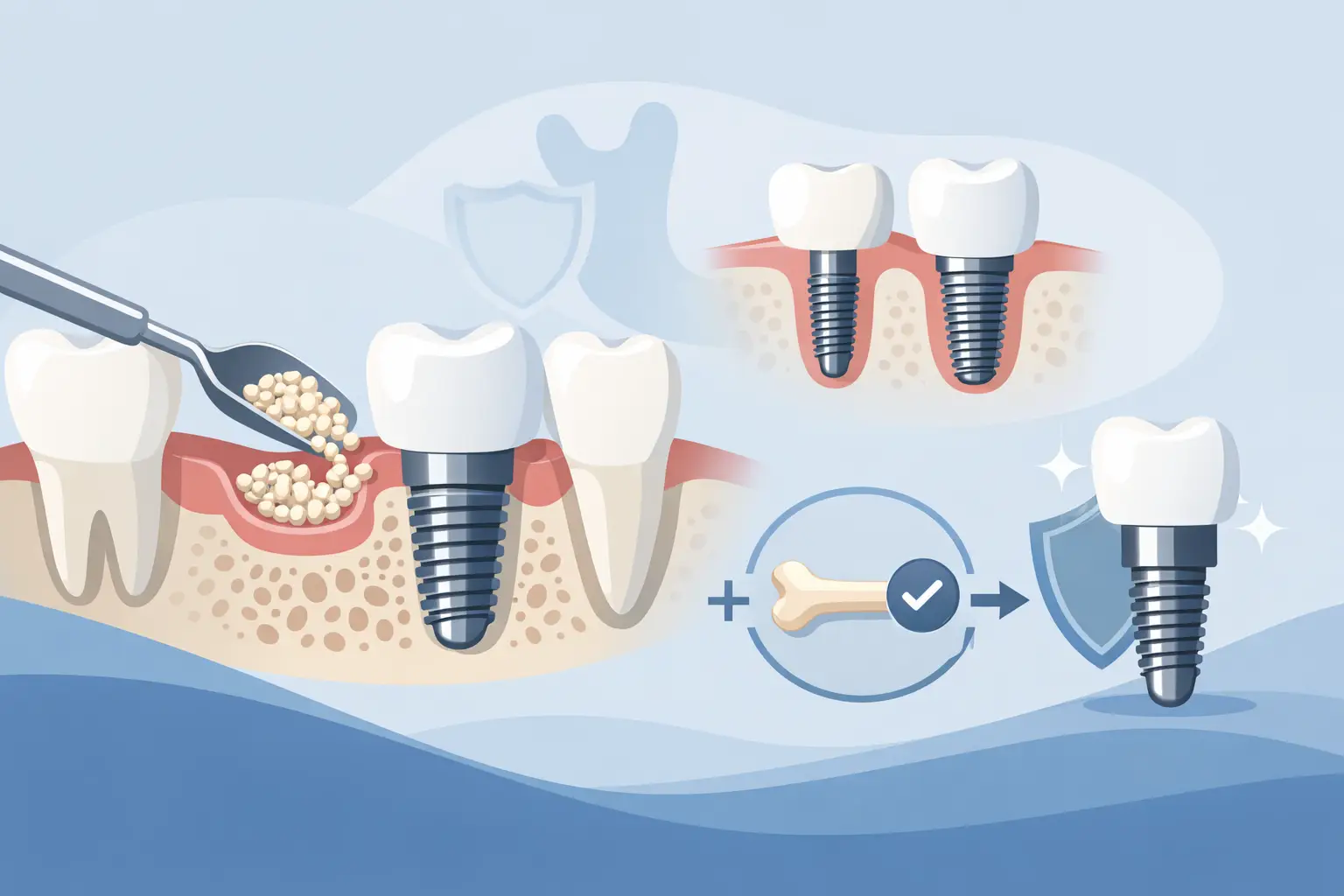
A dental implant may look like a replacement tooth, but its long-term success begins below the gumline. The jawbone must be healthy and substantial enough to hold an implant securely under the daily forces of biting and chewing. Understanding how bone grafting supports implants can make a recommended graft feel less like an added procedure and more like a carefully planned step toward a stable, natural-looking result.
When a tooth is lost, the bone that once supported it no longer receives the stimulation created by chewing. Over time, that area can shrink in height, width, or both. Gum disease, infection, trauma, and long-standing dentures can also contribute to bone loss. In these circumstances, placing an implant without rebuilding the site may compromise its position, appearance, and ability to withstand force.
How Bone Grafting Supports Dental Implants
A bone graft is a regenerative procedure that helps restore bone where it has been lost or where there is not enough bone to support an implant safely. The grafting material acts as a framework that encourages the body to form new bone. As healing occurs, the patient's own bone gradually integrates with the grafted area.
This added bone can give an implant the support it needs to integrate with the jaw. Dental implants depend on a biological process called osseointegration, in which living bone grows closely around the implant surface. A graft does not simply fill an empty space. It helps create the healthy foundation needed for that integration to occur in an ideal position.
The goal is not always to create the maximum amount of bone possible. Precision matters. A periodontist evaluates how much bone is needed, where it is needed, and how the final tooth should sit within the smile and bite. That planning helps protect both function and esthetics.
Why Bone Volume Matters for Implant Success
An implant must be surrounded by adequate bone on all sides, not just anchored at its deepest point. If the jawbone is too thin, the implant may be difficult to place in the proper angle or may be positioned too close to neighboring teeth. If it is too short, important structures such as the sinus cavity in the upper jaw or nerves in the lower jaw may limit placement.
Bone volume also affects the appearance of the final restoration. The bone under the gums helps support the tissue contours around an implant crown. When bone has receded, the gumline may appear uneven, dark metal may become more visible in some cases, or the replacement tooth may look longer than surrounding teeth.
For patients replacing a front tooth, these details are especially significant. For patients rebuilding several missing teeth, bone support can influence how securely an implant bridge or implant denture functions. The right approach depends on the location of the missing tooth, the amount of bone present, bite forces, gum health, and the overall treatment plan.
When a Bone Graft May Be Recommended
Not every implant patient needs grafting. Some patients have enough healthy bone for implant placement immediately after an extraction or years after losing a tooth. Others benefit from grafting because the site has changed over time.
A graft may be recommended when a tooth has been missing for many years, when periodontal disease has damaged the supporting bone, or when an infection has created a defect around a tooth that needs to be removed. It can also be helpful after traumatic injury, around failing implants, or when a patient has worn a removable denture that has placed pressure on the underlying ridge.
In some cases, grafting is performed at the same appointment as a tooth extraction. This is often called socket preservation. The goal is to limit the natural collapse of the bone after a tooth is removed, keeping more options available for a future implant.
Other cases require a more substantial graft before implant placement. This may involve rebuilding the width or height of the jaw ridge, or adding bone in the back of the upper jaw through a sinus augmentation. A three-dimensional scan allows the specialist to assess the anatomy with far greater accuracy than a traditional two-dimensional X-ray alone.
The Grafting Material Is Only Part of the Plan
Patients often ask whether grafting material comes from their own body, a human donor source, an animal donor source, or a synthetic material. Each option has specific clinical uses, and the right choice depends on the defect, the desired healing response, and the planned timing of implant placement.
The material itself is only one part of successful regeneration. The surrounding gum tissue, blood supply, protection of the grafted area, and control of infection are equally important. In many cases, a protective membrane is placed over the graft to help guide bone regeneration and keep faster-growing soft tissue from filling the space intended for bone.
This is why specialist evaluation matters. Bone grafting is not a one-size-fits-all procedure. A small extraction socket may require a conservative approach, while a complex defect may need advanced regenerative techniques and carefully staged treatment.
Timing: Can the Implant Be Placed at the Same Time?
Sometimes, yes. When an extraction site is free of significant infection and has enough stable bone to secure the implant, immediate implant placement may be an option. A graft may be placed around the implant at the same visit to fill small gaps and support the contours of the ridge.
In other situations, allowing the graft to heal before implant placement is the safer choice. If there is extensive bone loss, active infection, limited bone stability, or a need to rebuild the ridge significantly, a staged approach can provide a more predictable foundation. Healing commonly takes several months, though the timeline varies based on the procedure and the patient's health.
Waiting can feel frustrating when a patient wants to replace a missing tooth quickly. However, placing an implant before the site is ready can create greater challenges later. Thoughtful sequencing is often the best way to protect the investment in implant treatment.
What Healing and Recovery Usually Involve
Most patients experience mild to moderate swelling, tenderness, or bruising after bone grafting. These effects are typically temporary and can often be managed with prescribed or over-the-counter medications, cold compresses, and a soft-food diet during the early phase of healing.
Patients are usually asked to avoid disturbing the surgical site, smoking, and strenuous exercise for a period determined by the procedure. Smoking and nicotine use can significantly interfere with healing and increase the risk of graft and implant complications. Excellent plaque control is also essential, but brushing instructions may be modified temporarily to protect the area.
Healing is not just about feeling better after surgery. The graft needs time to become stable, vascularized bone capable of supporting an implant. Follow-up visits allow the specialist to monitor tissue healing, manage any concerns early, and confirm when the site is ready for the next phase.
Protecting the Result After Implant Placement
Bone grafting can support implant placement, but long-term implant health also depends on what happens afterward. Implants cannot develop cavities, yet the gums and bone around them can still become inflamed or infected. This condition, known as peri-implant disease, can lead to progressive bone loss if not addressed promptly.
Consistent professional maintenance, effective home care, and regular monitoring are especially important for patients with a history of gum disease. Nightguards may also be recommended for patients who clench or grind their teeth, since excessive force can place added stress on implants and restorations.
At Bita Farhoumand, DDS, treatment planning is centered on preserving healthy tissue and building support that lasts. As a board-certified periodontist and implant specialist, Dr. Farhoumand evaluates the full foundation for an implant - bone, gums, bite, and overall oral health - rather than focusing only on replacing a missing tooth.
A bone graft recommendation is not a setback. For the right patient, it is a measured investment in the structure that allows an implant to look natural, feel secure, and serve comfortably for years. A detailed periodontal and implant evaluation can clarify whether grafting is needed and identify the most conservative path toward a strong result.
Quick Links
Helpful Articles
article_category: products
article_category: psychiatry
article_category: faqs
article_category: cats
article_category: general
article_category: services
article_category: technology
article_category: dogs
article_category: restorative
article_category: vision therapy
article_category: contact lenses
article_category: health
article_category: conditions
article_category: eye surgery co-management
article_category: exotic
article_category: cosmetic
article_category: surgical procedures
article_category: aesthetics
article_category: preventative
article_category: ocular disease management
article_category: eyeglasses
article_category: eye health
article_category: large animal
[]
article_category: psychiatry
article_category: faqs
article_category: cats
article_category: general
article_category: services
article_category: technology
article_category: dogs
article_category: restorative
article_category: vision therapy
article_category: contact lenses
article_category: health
article_category: conditions
article_category: eye surgery co-management
article_category: exotic
article_category: cosmetic
article_category: surgical procedures
article_category: aesthetics
article_category: preventative
article_category: ocular disease management
article_category: eyeglasses
article_category: eye health
article_category: large animal
[]
Flowbite is an open-source library of interactive components built on top of Tailwind CSS including buttons, dropdowns, modals, navbars, and more.
Check out this guide to learn how to get started and start developing websites even faster with components on top of Tailwind CSS.
All Dental Services
We offer a wide variety of dental services to the Encinitas community. Contact us with any questions about our services.

Keep In Touch
For non-urgent questions or to learn more about our services, contact us today!
© 2026 Bita Farhoumand, DDS. All rights Reserved - Accessibility Statement - Privacy Policy - Sitemap
Managed and Designed by 