
Implant Supported Dentures Benefits That Matter
Blog:Implant Supported Dentures Benefits That Matter
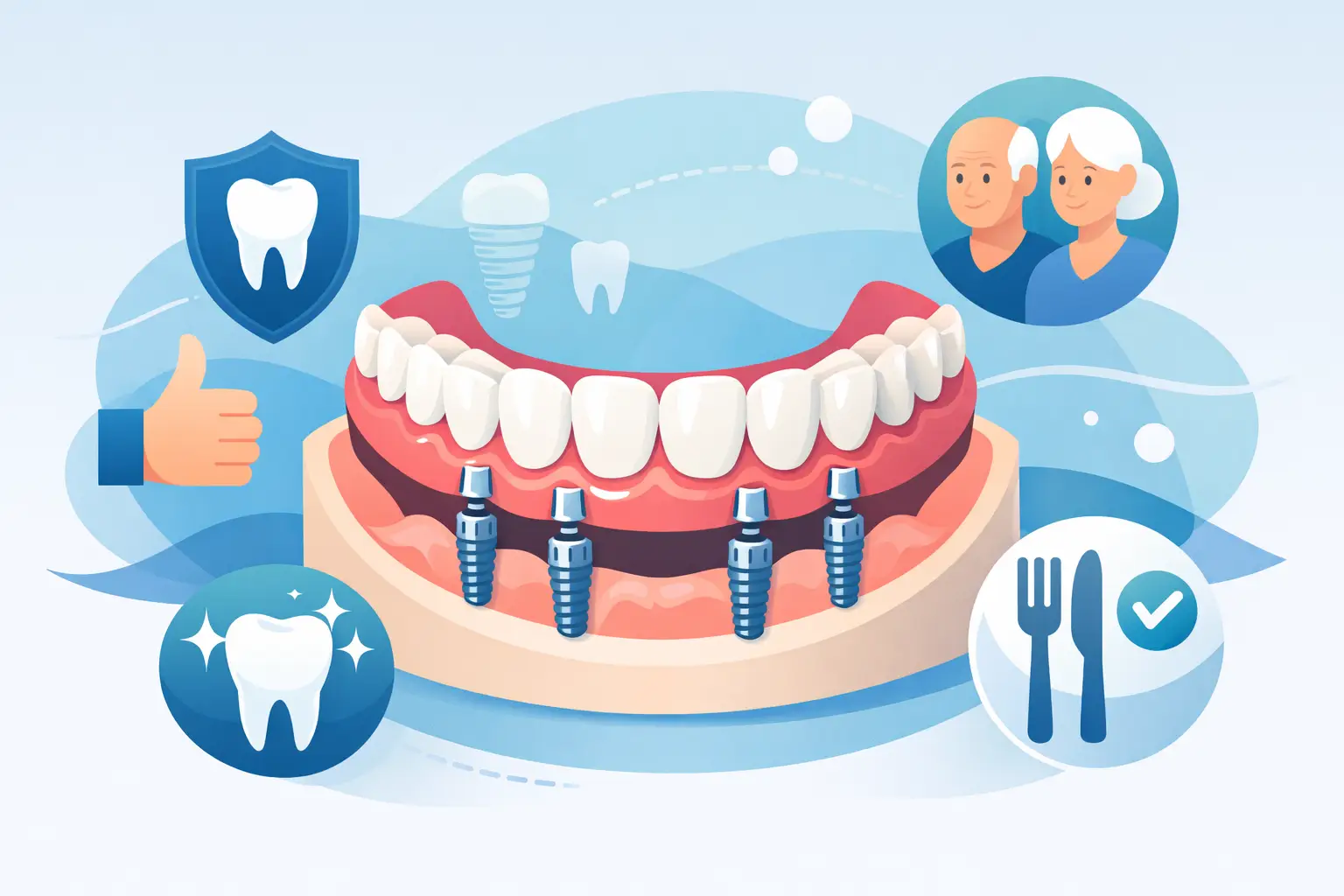
A denture that shifts when you speak, clicks during a meal, or requires adhesive every morning can affect far more than your smile. The most meaningful implant supported dentures benefits are often practical: greater stability, stronger chewing ability, and the confidence to participate in daily life without worrying about your teeth moving.
For patients who have lost several or all teeth, implant-supported dentures can provide a more secure alternative to conventional removable dentures. The right solution depends on your bone health, gum condition, medical history, restorative goals, and preference for a removable or fixed restoration. A thorough periodontal and implant evaluation helps determine which approach can support lasting function.
What Are Implant-Supported Dentures?
Implant-supported dentures are replacement teeth anchored by dental implants placed in the jawbone. Unlike a traditional denture that rests on the gums, this type of restoration connects to implants that act as artificial tooth roots. The implants provide support, helping the denture remain stable during chewing and speaking.
There are two primary designs. A removable overdenture snaps or clips onto implants and can be removed at home for cleaning. A fixed full-arch implant bridge is secured to implants and is removed only by a dental professional. Both options can be life-changing for the right patient, but they have different maintenance needs, treatment timelines, and costs.
The number of implants needed varies. Some patients receive two implants to stabilize a lower denture, while others need four or more implants to support a full arch. Bone quality, bite forces, anatomy, and the type of final restoration all influence the treatment plan.
Implant Supported Dentures Benefits for Everyday Life
More stability while eating and speaking
Conventional dentures can move because they rely on gum tissue, natural suction, and muscle control. Lower dentures are particularly challenging because the tongue and floor of the mouth can easily disrupt their fit. Implant support helps hold the denture in place, reducing unwanted movement during normal activities.
That stability can make speech feel more natural and allow many patients to eat a broader range of foods with greater confidence. While every restoration has limits, patients often find they can enjoy foods that were difficult with loose dentures, including firmer fruits, vegetables, and proteins.
Less dependence on adhesives
Denture adhesive may help some conventional dentures fit more securely, but it can be inconvenient and does not correct an underlying problem such as significant ridge shrinkage. Implant-supported dentures are designed to derive stability from the implants rather than adhesive.
Patients with a removable overdenture may still need periodic adjustments as the denture material and attachments wear over time. Even so, eliminating or reducing daily adhesive use is a meaningful improvement for many people.
Better support for jawbone preservation
After teeth are lost, the jawbone no longer receives the stimulation that tooth roots once provided. Over time, the bone may gradually resorb, changing facial contours and making conventional dentures more difficult to retain.
Dental implants transfer chewing forces into the jawbone, which can help preserve bone in the areas surrounding the implants. They cannot restore every bit of bone that has already been lost, and they do not stop all facial aging changes. However, implant treatment can play an important role in maintaining the foundation needed for a stable, functional smile.
For patients with advanced bone loss, bone grafting may be recommended before or during implant treatment. This is one reason specialty evaluation matters. A periodontist can assess whether the existing bone can support implants safely or whether regeneration is needed to improve long-term predictability.
More comfortable fit for many patients
A well-fitting conventional denture can be comfortable, but it still rests directly on the gums. Pressure and friction may lead to sore spots, especially when the jaw ridge has become thin or uneven. Implant support can reduce rocking and sliding, often improving comfort during chewing.
Fixed implant bridges can also avoid the broad palate coverage common with a traditional upper denture. For some patients, this can improve the experience of eating and tasting food. The best design remains individual. A removable overdenture may be the more practical choice when ease of cleaning, anatomy, or budget are key considerations.
Confidence that extends beyond appearance
The cosmetic change can be significant, but confidence is not only about how teeth look in photographs. It is also about speaking in a meeting, laughing with family, ordering food at a restaurant, and not planning your day around a loose appliance.
A carefully designed implant-supported restoration should support facial proportions, speech, and bite function while looking natural. The goal is not to create a generic smile. It is to create a restoration that fits the patient’s face, oral health needs, and lifestyle.
Fixed vs. Removable Implant Dentures
A fixed full-arch restoration feels most like non-removable teeth because it remains secured in place. It may be an excellent option for patients who want maximum stability and do not want to remove their teeth at night. Cleaning is still essential and requires daily attention around and beneath the bridge, often with specialized brushes or water flossing tools.
A removable implant overdenture is stable during wear but can be taken out for cleaning. This can make hygiene more straightforward for some patients, especially those with limited hand dexterity. It is generally less costly than a fixed full-arch solution, although ongoing maintenance of attachment components should be expected.
Neither option is automatically better. A fixed bridge may offer exceptional stability, while a removable overdenture may provide an effective and more accessible path to improved function. The decision should be based on clinical findings, hygiene ability, personal preferences, and the long-term care each option requires.
Who May Be a Candidate?
Candidates often include people who are missing all teeth in one or both arches, struggle with loose conventional dentures, or are facing extensive extractions because remaining teeth cannot be predictably saved. Patients with failing older dental work may also benefit from a comprehensive evaluation.
Good candidacy is not determined by age alone. Overall health, smoking or vaping habits, diabetes control, periodontal health, bite forces, and bone availability all matter. Gum disease must be treated and controlled before implants are placed. Implants need healthy surrounding tissue and bone to succeed over the long term.
Patients who have been told they lack enough bone should not assume implants are out of reach. In some cases, bone grafting or other regenerative procedures can create a stronger foundation. In other cases, anatomy may call for a different implant position, restorative design, or treatment approach. Honest planning is essential, especially when long-term success is the priority.
The Treatment Process Requires Planning
Implant dentistry is not a one-size-fits-all procedure. It begins with a detailed examination, imaging, and assessment of the gums, bone, bite, and remaining teeth. This diagnostic stage helps identify risks that could compromise the final result, including untreated periodontal disease, infection, inadequate bone volume, or excessive bite pressure.
If teeth need to be removed, a temporary denture may be used while the implants integrate with the bone. Some patients may qualify for immediate temporary teeth, while others benefit from a staged approach that allows healing or grafting first. The safest timeline depends on the condition of the bone and soft tissue, not simply on how quickly a final smile can be delivered.
After healing, the final restoration is designed with attention to appearance, speech, bite, and cleanability. This collaborative process may involve a periodontist, restorative dentist, and dental laboratory. Precision at each phase helps protect the investment patients make in their oral health.
Long-Term Care Protects the Result
Implants do not decay, but they can develop inflammation and bone loss if bacterial plaque accumulates around them. This condition, known as peri-implant disease, can threaten implant stability if it is not detected and treated early.
Daily home care and regular professional maintenance are essential. Removable dentures should be cleaned thoroughly inside and out, along with the implant attachments and gum tissue. Fixed bridges require deliberate cleaning beneath the restoration and around the implants. Professional examinations allow the care team to monitor tissue health, bite changes, attachment wear, and the condition of the restoration.
At Bita Farhoumand, DDS, implant planning is guided by the health of the gums and supporting bone, not just the appearance of the final teeth. When the foundation is assessed and treated with precision, implant-supported dentures can offer a reliable path toward eating comfortably, speaking confidently, and protecting the health of your smile for years ahead.
Quick Links
Helpful Articles
article_category: products
article_category: psychiatry
article_category: faqs
article_category: cats
article_category: general
article_category: services
article_category: technology
article_category: dogs
article_category: restorative
article_category: vision therapy
article_category: contact lenses
article_category: health
article_category: conditions
article_category: eye surgery co-management
article_category: exotic
article_category: cosmetic
article_category: surgical procedures
article_category: aesthetics
article_category: preventative
article_category: ocular disease management
article_category: eyeglasses
article_category: eye health
article_category: large animal
[]
article_category: psychiatry
article_category: faqs
article_category: cats
article_category: general
article_category: services
article_category: technology
article_category: dogs
article_category: restorative
article_category: vision therapy
article_category: contact lenses
article_category: health
article_category: conditions
article_category: eye surgery co-management
article_category: exotic
article_category: cosmetic
article_category: surgical procedures
article_category: aesthetics
article_category: preventative
article_category: ocular disease management
article_category: eyeglasses
article_category: eye health
article_category: large animal
[]
Flowbite is an open-source library of interactive components built on top of Tailwind CSS including buttons, dropdowns, modals, navbars, and more.
Check out this guide to learn how to get started and start developing websites even faster with components on top of Tailwind CSS.
All Dental Services
We offer a wide variety of dental services to the Encinitas community. Contact us with any questions about our services.

Keep In Touch
For non-urgent questions or to learn more about our services, contact us today!
© 2026 Bita Farhoumand, DDS. All rights Reserved - Accessibility Statement - Privacy Policy - Sitemap
Managed and Designed by 