
LANAP Laser Periodontal Therapy Explained
Blog:LANAP Laser Periodontal Therapy Explained
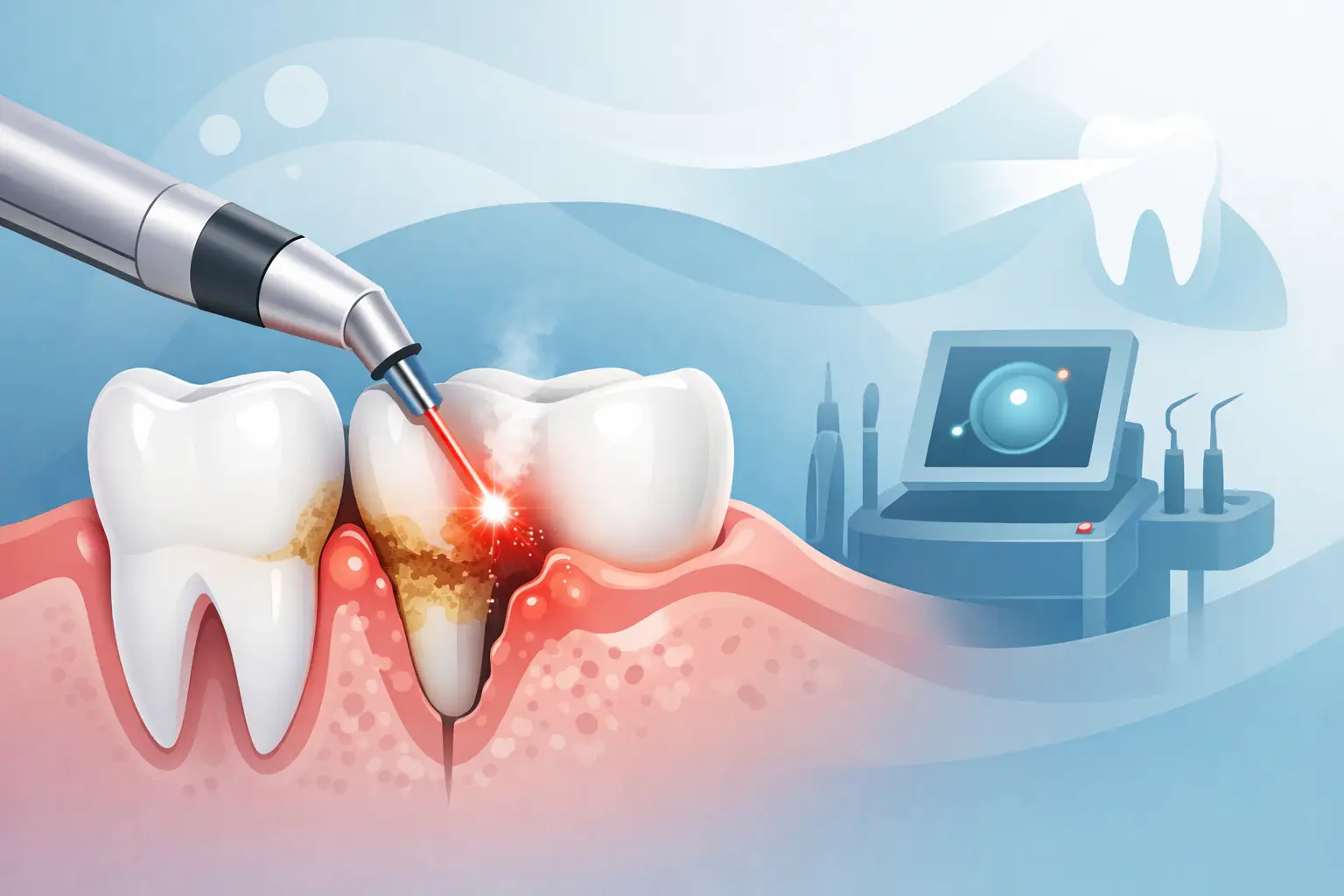
If you have been told you need gum surgery, the first concern is usually not the technical name of the procedure. It is whether treatment will hurt, how long recovery will take, and whether your teeth can actually be saved. That is why lanap laser periodontal therapy has become an important option for patients with moderate to advanced gum disease who want effective treatment without the drawbacks of traditional surgery.
Periodontal disease is not just irritated gums. It is a progressive infection that damages the tissues and bone supporting your teeth. As it advances, gums pull away, pockets deepen, bone is lost, and teeth can become loose. In many cases, the problem has been developing quietly for years before patients notice bleeding, bad breath, gum recession, or shifting teeth.
What lanap laser periodontal therapy is
LANAP stands for Laser-Assisted New Attachment Procedure. It is a laser-based treatment designed to remove diseased tissue and bacteria from periodontal pockets while preserving as much healthy tissue as possible. Unlike traditional gum surgery that often involves cutting the gums with a scalpel and placing sutures, LANAP uses a specialized dental laser to target infected areas with precision.
That distinction matters. Periodontal treatment should never be about doing the most work possible. It should be about treating the disease thoroughly while protecting the structures you want to keep. For the right patient, LANAP can support that goal with less trauma to the tissue and a more comfortable recovery.
The procedure is typically used when gum disease has progressed beyond what a standard deep cleaning alone can predictably manage. If periodontal pockets remain deep, bleeding persists, or bone loss is already present, a periodontist may recommend a more advanced approach.
Why patients consider LANAP instead of traditional surgery
The biggest reason is simple: most patients want a treatment that is effective, conservative, and easier to recover from. Traditional flap surgery can still be appropriate in some cases, especially when anatomy, defect shape, or access makes open surgery the better option. But many patients are relieved to learn that not every advanced periodontal case requires a scalpel-based procedure.
With LANAP, the laser is used to selectively remove diseased pocket lining and reduce the bacterial load. Tartar and hard deposits are then removed from the root surfaces, and the area is treated to help create a stable environment for healing. Because the treatment is more targeted, patients often experience less bleeding, less swelling, and less post-operative discomfort than they expect from gum surgery.
That does not mean it is a shortcut or a cosmetic fix. LANAP is still a serious periodontal treatment for serious disease. The difference is in how the disease is managed and how the tissues respond afterward.
How LANAP laser periodontal therapy works
A periodontal pocket forms when bacteria and inflammation cause the gums to detach from the tooth. Once that space deepens, it becomes harder to clean and easier for infection to progress. The purpose of lanap laser periodontal therapy is to disinfect the pocket, remove diseased tissue, and create conditions that support reattachment and stability.
The process generally begins with careful measurement of the pockets and a full periodontal evaluation. The laser fiber is inserted into the pocket to target inflamed tissue and bacteria. After that, the root surfaces are cleaned to remove calculus and biofilm. The laser may then be used again to help form a stable clot that seals the pocket and protects the area during healing.
Patients often ask whether the laser is burning the gums away. That is not the goal. In skilled hands, the laser is used with precision to distinguish unhealthy tissue from healthy structures. This is one reason specialist training matters. Periodontal treatment is not only about using advanced technology. It is about using it appropriately, based on diagnosis, tissue condition, and long-term prognosis.
Who may be a good candidate
LANAP is often recommended for adults with moderate to severe periodontal disease, especially when pocketing and bone loss are too advanced for non-surgical treatment alone. It may also appeal to patients who feel anxious about traditional gum surgery or who want a less invasive option when clinically appropriate.
Good candidates often include people with bleeding gums, persistent inflammation, loose teeth, gum recession linked to periodontal disease, or areas where deep pockets are putting teeth at risk. Patients with medical considerations may also ask about laser therapy because reduced bleeding can be appealing, although candidacy always depends on the full health picture.
Still, not every patient with gum disease needs LANAP, and not every advanced case is best treated with it. Some patients do very well with scaling and root planing plus close periodontal maintenance. Others need grafting, regenerative procedures, or a combination of therapies. The right treatment depends on pocket depth, bone architecture, tooth mobility, existing restorations, and overall goals for saving the dentition.
Benefits patients often notice
For many patients, the most meaningful benefit is not that the treatment uses a laser. It is that they can address advanced gum disease in a way that feels more manageable. Recovery is often easier than expected, and the experience can be less intimidating than traditional surgery.
Patients commonly appreciate reduced discomfort, less bleeding during and after treatment, and minimal recession compared with some conventional surgical approaches. Healing can feel smoother, and many people are able to return to normal routines more quickly. Another major benefit is the emphasis on preserving natural teeth whenever possible. In periodontics, saving a healthy, functional tooth is usually better than losing it and replacing it later.
There is also a practical advantage. When inflammation is reduced and pockets become healthier and easier to maintain, home care and professional maintenance become more effective. That helps support long-term stability rather than temporary improvement.
What treatment and recovery are really like
Most patients are surprised that the procedure is more comfortable than they imagined. Local anesthesia is used, and sedation may be available for those who are especially anxious. Because there is typically no scalpel and no sutures, the experience often feels less dramatic than the word surgery suggests.
After treatment, you can expect to follow a detailed healing plan. That may include dietary modifications for a period of time, careful hygiene instructions, and follow-up visits to monitor healing. The initial recovery is usually manageable, but healing is still a process. The tissues need time to stabilize, and the bone and attachment response continue beyond the first few days.
This is where expectations matter. LANAP can be highly effective, but it is not magic and it does not erase years of periodontal disease overnight. The long-term result depends on the severity of disease, the condition of the teeth, your systemic health, smoking status, bite forces, and how consistently you maintain your periodontal care afterward.
Why specialist care matters
Laser technology is only one part of successful periodontal treatment. Diagnosis, case selection, and long-term management are just as important. A board-certified periodontist has advanced training in the structures that support the teeth and in the surgical and non-surgical methods used to preserve them.
That level of expertise matters when the goal is not simply to clean the gums, but to decide whether a tooth can be saved, whether bone loss can be stabilized, and whether laser therapy is the best tool for that specific case. Patients dealing with advanced periodontal disease, failing implants, or complex bone defects often benefit from specialist evaluation because the stakes are higher and treatment decisions are more nuanced.
In a specialty practice like Bita Farhoumand, DDS in Encinitas, that evaluation is centered on precision, comfort, and long-term function. For patients in North County San Diego who want answers that go beyond a basic cleaning or a rushed recommendation for extraction, that depth of periodontal expertise can make a meaningful difference.
What happens after LANAP
Successful treatment does not end when the laser procedure is complete. Periodontal disease is a chronic condition, which means maintenance is essential even after excellent results. Regular periodontal cleanings, home care tailored to your needs, and periodic reevaluation of pocket depths help protect the investment you made in saving your teeth.
If habits or health factors continue to fuel inflammation, disease can return. On the other hand, when patients stay consistent with maintenance and work with a specialist team, many are able to keep compromised teeth far longer than they expected.
For patients facing gum disease, the most reassuring message is this: treatment has advanced. If you have been putting off care because you fear traditional gum surgery, lanap laser periodontal therapy may offer a more conservative path forward. The next step is not guessing - it is getting a precise diagnosis and a treatment plan built around keeping your smile healthy, stable, and functional for the long term.
Quick Links
Helpful Articles
article_category: products
article_category: psychiatry
article_category: faqs
article_category: cats
article_category: general
article_category: services
article_category: technology
article_category: dogs
article_category: restorative
article_category: vision therapy
article_category: contact lenses
article_category: health
article_category: conditions
article_category: eye surgery co-management
article_category: exotic
article_category: cosmetic
article_category: surgical procedures
article_category: aesthetics
article_category: preventative
article_category: ocular disease management
article_category: eyeglasses
article_category: eye health
article_category: large animal
[]
article_category: psychiatry
article_category: faqs
article_category: cats
article_category: general
article_category: services
article_category: technology
article_category: dogs
article_category: restorative
article_category: vision therapy
article_category: contact lenses
article_category: health
article_category: conditions
article_category: eye surgery co-management
article_category: exotic
article_category: cosmetic
article_category: surgical procedures
article_category: aesthetics
article_category: preventative
article_category: ocular disease management
article_category: eyeglasses
article_category: eye health
article_category: large animal
[]
Flowbite is an open-source library of interactive components built on top of Tailwind CSS including buttons, dropdowns, modals, navbars, and more.
Check out this guide to learn how to get started and start developing websites even faster with components on top of Tailwind CSS.
All Dental Services
We offer a wide variety of dental services to the Encinitas community. Contact us with any questions about our services.

Keep In Touch
For non-urgent questions or to learn more about our services, contact us today!
© 2026 Bita Farhoumand, DDS. All rights Reserved - Accessibility Statement - Privacy Policy - Sitemap
Managed and Designed by 