
LANAP vs Gum Surgery: Which Treatment Fits?
Blog:LANAP vs Gum Surgery: Which Treatment Fits?
A periodontal diagnosis can feel overwhelming, especially when you are told you need more than a routine cleaning. The question of LANAP vs gum surgery is not simply about choosing a laser or avoiding a surgical procedure. It is about selecting the treatment that gives your teeth, gums, and supporting bone the best long-term chance of staying healthy.
For some patients, LANAP laser therapy can address periodontal infection with less disruption to healthy tissue and a more comfortable recovery. For others, conventional periodontal surgery provides the access and precision needed to treat advanced bone loss, deep defects, recession, or complex anatomy. A careful examination by a periodontal specialist is what determines the appropriate path.
What LANAP Treatment Is Designed to Do
LANAP stands for Laser-Assisted New Attachment Procedure. It is a specific protocol that uses a specialized dental laser to target diseased tissue and bacteria within periodontal pockets. These pockets form when gum disease damages the attachment between the teeth and gums, allowing harmful bacteria to collect below the gumline.
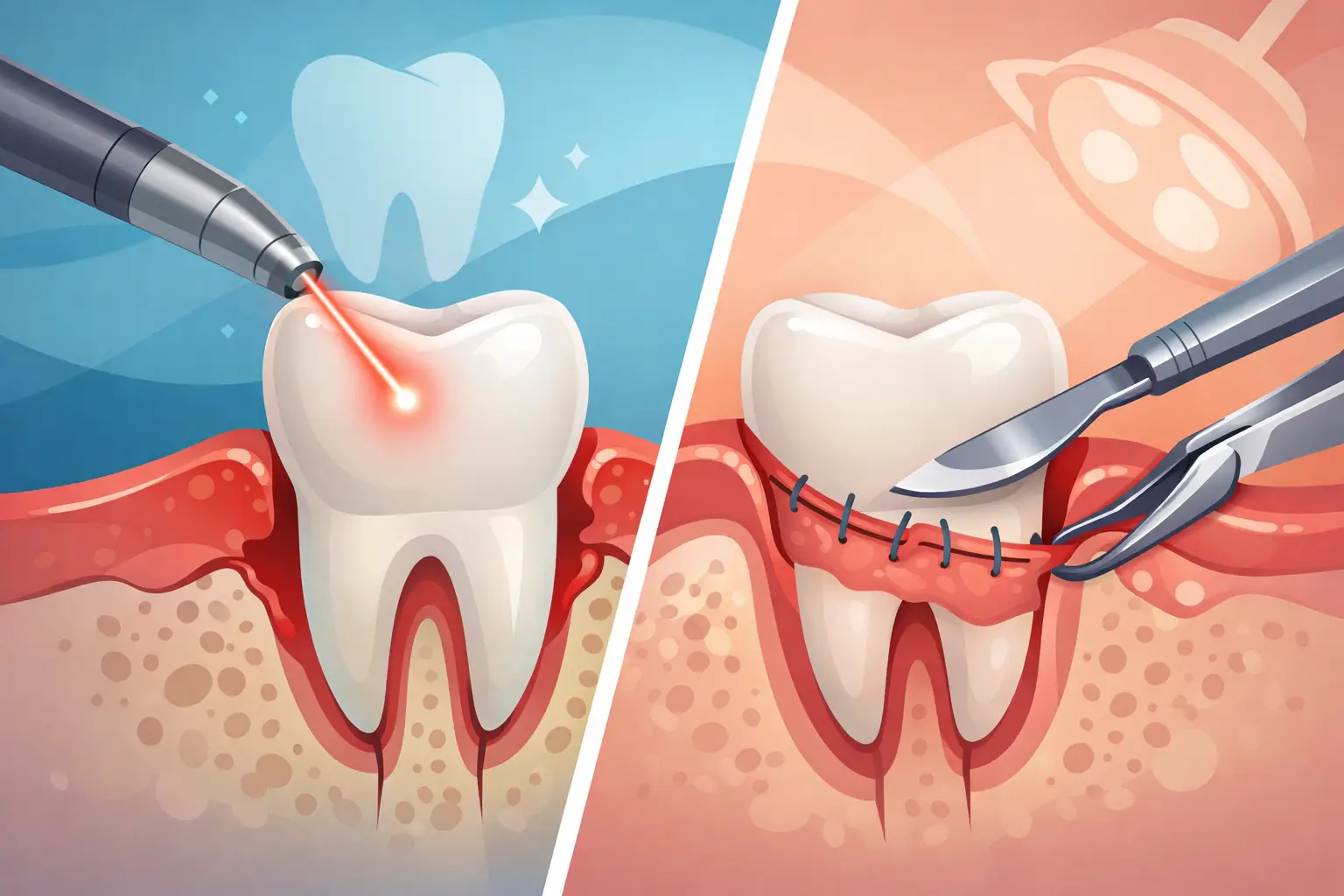
During treatment, the laser selectively removes inflamed tissue and helps reduce bacteria in the pocket. The root surfaces are then cleaned to remove calculus, and the bite may be adjusted to reduce excessive pressure on teeth with reduced support. The goal is to create an environment where the gums can heal and reattach more favorably around the teeth.
One reason patients ask about LANAP is comfort. The treatment generally requires local anesthesia, but it often involves less cutting and suturing than traditional flap surgery. Many patients experience less swelling, bleeding, and post-treatment discomfort. Recovery can also be easier for patients who are anxious about surgery or who need to return to normal activities promptly.
That said, LANAP is not a shortcut or a cosmetic alternative to treating gum disease. It is a clinical procedure that must be performed with careful diagnosis, appropriate technique, and ongoing periodontal maintenance.
LANAP vs Gum Surgery: The Core Difference
Traditional gum surgery, often called periodontal flap surgery, gives the periodontist direct visual and physical access to the roots and bone surrounding affected teeth. The gum tissue is gently moved back so plaque, calculus, and infected tissue can be thoroughly removed from areas that may be impossible to clean adequately through a deep pocket alone.
Once the roots are cleaned, the specialist may reshape irregular bone, place regenerative materials, or reposition the gum tissue. Sutures are typically used while the area heals. This approach remains highly valuable because it allows treatment to be customized to what is actually happening below the gumline.
LANAP uses laser energy to treat infection within the periodontal pocket without lifting the gum tissue in the same manner. Conventional surgery is more direct and can be more versatile when the disease involves complex bone architecture, furcation involvement between tooth roots, or defects that may benefit from grafting and regeneration.
Neither option is automatically "better." LANAP may be an excellent choice for the right periodontal condition. Conventional surgery may be the more predictable choice when the anatomy requires direct access or rebuilding. The best treatment is the one that addresses the disease thoroughly while preserving as much healthy tissue and bone as possible.
When LANAP May Be a Strong Option
LANAP may be considered for patients with moderate to advanced periodontal disease, particularly when there are deep periodontal pockets and inflamed, bleeding gum tissue around natural teeth. It can be especially appealing for people who have delayed treatment due to fear of surgery, concerns about downtime, or previous difficult experiences with dental procedures.
It may also be appropriate when a patient has generalized gum disease affecting multiple areas of the mouth. Rather than treating one isolated site surgically, the LANAP protocol can address disease more broadly while limiting surgical trauma.
Patients with medical conditions or medications that affect healing still need an individualized assessment. Diabetes, smoking, certain blood thinners, immune-system conditions, and a history of periodontal treatment can all influence the treatment plan. Less invasive does not mean risk-free, and a laser procedure should never be selected without reviewing the full clinical picture.
When Traditional Gum Surgery May Be Necessary
Conventional gum surgery is often recommended when disease is localized but structurally complex. For example, a tooth may have a deep, narrow bone defect that could respond best to regenerative treatment with bone grafting materials and a membrane. Direct access can allow the periodontist to clean the area precisely and place these materials where they have the greatest potential benefit.
Surgery may also be preferable when there is substantial tartar below the gumline, severe root irregularity, or bone loss around the areas where roots divide. These are difficult locations to treat predictably without seeing the treatment area directly.
Gum surgery can also serve goals beyond infection control. It may be used to correct gum recession, improve the quality of tissue around a tooth or implant, expose more tooth structure for a restoration, or prepare a site for dental implant placement. LANAP and traditional surgery address different clinical needs, even though both fall under periodontal care.
Recovery, Comfort, and What Patients Can Expect
Recovery varies by treatment, the severity of disease, and the number of areas treated. After LANAP, patients commonly report mild tenderness and sensitivity. The gums may look different as inflammation resolves and tissue heals. A modified diet and specific home-care instructions are often recommended during the initial healing period.
After conventional periodontal surgery, patients may have more noticeable swelling and tenderness, particularly when grafting or regenerative procedures are involved. Sutures may remain in place for a short period, and follow-up appointments are essential for monitoring healing. Most discomfort can be managed with a personalized post-operative plan.
Comfort matters, but it should not be the only deciding factor. A procedure with an easier early recovery is only the right choice if it can adequately treat the underlying condition. Conversely, a more involved procedure may be worthwhile when it offers the best opportunity to stabilize a tooth, restore lost support, or prevent future complications.
The Role of Maintenance After Either Treatment
No periodontal procedure permanently eliminates the risk of gum disease returning. Periodontal disease is a chronic bacterial and inflammatory condition, and it requires ongoing management after treatment. This is true whether a patient receives LANAP, flap surgery, scaling and root planing, or regenerative therapy.
Professional periodontal maintenance visits are usually more frequent than standard dental cleanings. At these appointments, the team monitors pocket depths, bleeding, plaque accumulation, gum recession, tooth mobility, and changes around implants. Home care also matters. Brushing effectively, cleaning between teeth daily, managing dry mouth when present, and avoiding tobacco all support long-term results.
A patient who commits to maintenance may be able to preserve natural teeth for many years. Without maintenance, even excellent surgical or laser treatment can lose ground to recurring infection.
How a Periodontist Chooses the Right Approach
The decision begins with more than pocket measurements. A comprehensive periodontal evaluation includes gum health, bone levels on diagnostic imaging, the pattern of bone loss, root anatomy, bite forces, tooth mobility, medical history, and your ability to maintain the area at home. If implants are present, they must be assessed separately because infection around implants behaves differently than disease around natural teeth.
Your goals matter as well. Some patients are focused on saving a specific tooth. Others want to treat generalized disease before it progresses to tooth loss. Others have been told they need an extraction and want to understand whether the tooth can be preserved. A specialist should explain what each treatment can realistically accomplish, including its limitations.
At Bita Farhoumand, DDS, treatment planning is centered on precision care at every level. As a board-certified periodontist, Dr. Farhoumand evaluates whether laser therapy, conventional surgery, regenerative treatment, or a combined approach offers the strongest long-term prognosis for each patient.
The right next step is not to assume that laser treatment is always gentler or that conventional surgery is always more effective. Ask for a clear diagnosis, understand the condition of the bone and gum tissue around each affected tooth, and choose treatment based on what will protect your oral health for the years ahead.
Quick Links
Helpful Articles
article_category: products
article_category: psychiatry
article_category: faqs
article_category: cats
article_category: general
article_category: services
article_category: technology
article_category: dogs
article_category: restorative
article_category: vision therapy
article_category: contact lenses
article_category: health
article_category: conditions
article_category: eye surgery co-management
article_category: exotic
article_category: cosmetic
article_category: surgical procedures
article_category: aesthetics
article_category: preventative
article_category: ocular disease management
article_category: eyeglasses
article_category: eye health
article_category: large animal
[]
article_category: psychiatry
article_category: faqs
article_category: cats
article_category: general
article_category: services
article_category: technology
article_category: dogs
article_category: restorative
article_category: vision therapy
article_category: contact lenses
article_category: health
article_category: conditions
article_category: eye surgery co-management
article_category: exotic
article_category: cosmetic
article_category: surgical procedures
article_category: aesthetics
article_category: preventative
article_category: ocular disease management
article_category: eyeglasses
article_category: eye health
article_category: large animal
[]
Flowbite is an open-source library of interactive components built on top of Tailwind CSS including buttons, dropdowns, modals, navbars, and more.
Check out this guide to learn how to get started and start developing websites even faster with components on top of Tailwind CSS.
All Dental Services
We offer a wide variety of dental services to the Encinitas community. Contact us with any questions about our services.

Keep In Touch
For non-urgent questions or to learn more about our services, contact us today!
© 2026 Bita Farhoumand, DDS. All rights Reserved - Accessibility Statement - Privacy Policy - Sitemap
Managed and Designed by 