
LANAP vs Scaling Root Planing: Which Fits You?
Blog:LANAP vs Scaling Root Planing: Which Fits You?
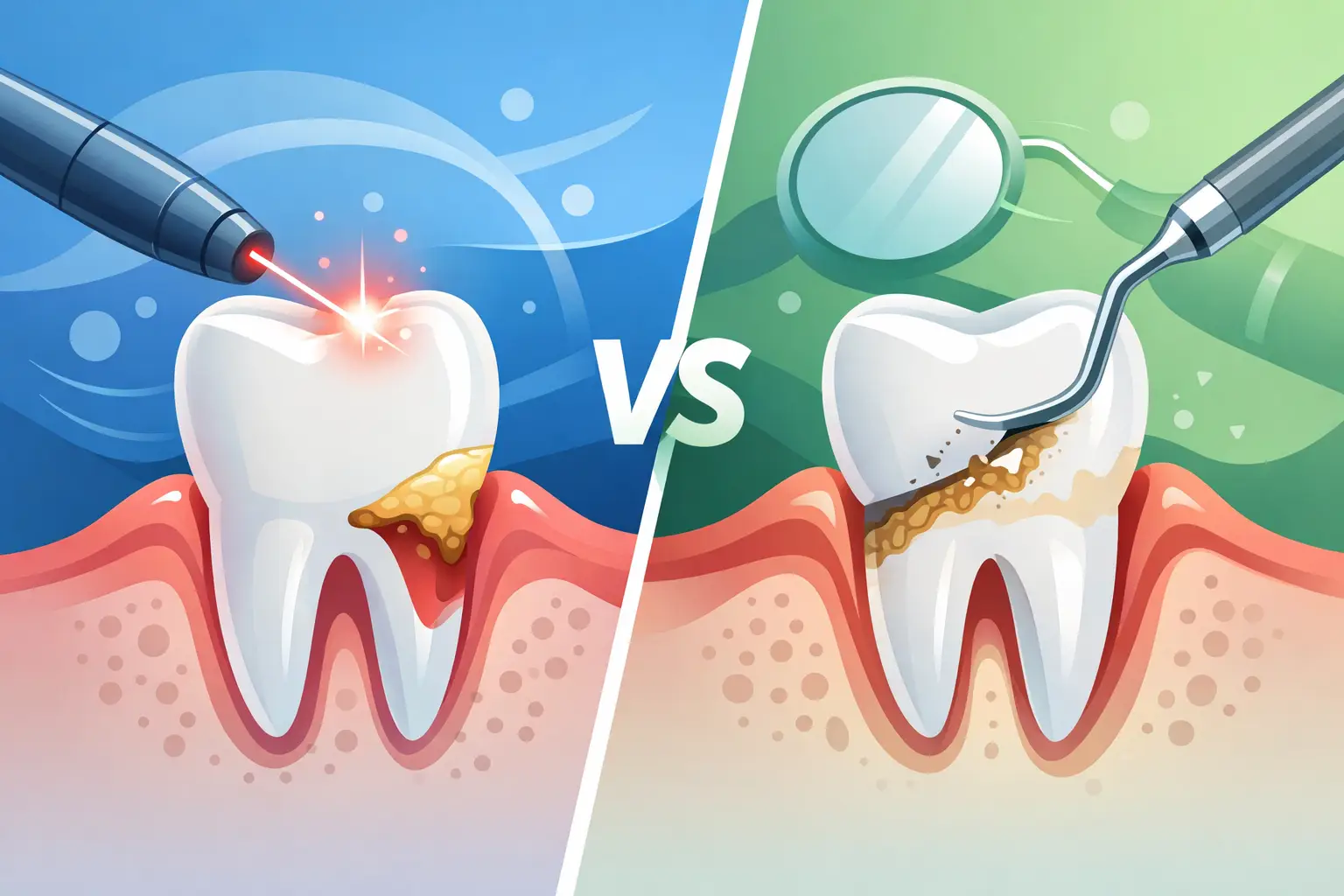
When comparing LANAP vs scaling root planing, the better choice is not automatically the newest treatment or the least invasive one. It is the treatment that addresses the type, severity, and location of your periodontal disease while giving your teeth and supporting bone the best possible chance of long-term stability. For many patients, scaling and root planing is the appropriate first step. For others with deeper pockets or more advanced disease, laser periodontal therapy may offer meaningful advantages.
Gum disease is not simply a surface problem. Bacteria and inflammation can extend below the gumline, where they damage the fibers and bone that hold teeth in place. A thorough periodontal examination, including pocket measurements, X-rays, bleeding patterns, bone levels, recession, and medical history, is essential before recommending either approach.
What Scaling and Root Planing Treats
Scaling and root planing, often called a deep cleaning, is a nonsurgical periodontal treatment. Scaling removes bacterial plaque and hardened deposits, known as calculus, from above and below the gumline. Root planing smooths contaminated root surfaces so the gums can heal more closely against the teeth and become easier to maintain.
This treatment is often recommended for early to moderate periodontal disease, especially when pocket depths and bone loss are limited. Local anesthetic is commonly used to keep the visit comfortable. Treatment may be completed by area of the mouth, depending on the extent of buildup and inflammation.
For the right patient, scaling and root planing can substantially reduce inflammation, bleeding, and pocket depths. It also creates a cleaner foundation for daily home care and periodontal maintenance visits. However, it is not a one-time cure. Periodontal disease is chronic, and patients who have experienced bone loss generally need ongoing professional maintenance to prevent recurrence.
Scaling and root planing has important strengths: it is well established, effective for many cases, and typically more widely covered by dental insurance than advanced laser procedures. It is also a valuable diagnostic step. Your response to initial treatment can help reveal whether the disease is stabilizing or whether deeper sites require additional care.
Its limitations matter, too. Deep, complex pockets can be difficult to clean fully with conventional instruments alone. In advanced cases, residual bacteria and diseased tissue may remain, particularly around root grooves, furcations between roots, or areas with significant bone loss. Some patients may still need surgical periodontal treatment after deep cleaning if inflammation and deep pockets persist.
LANAP vs Scaling Root Planing: The Key Differences
LANAP is a laser-based protocol used to treat periodontal disease. The procedure uses a specialized dental laser to identify and remove diseased pocket lining while targeting bacteria associated with periodontal infection. The laser energy is followed by careful cleaning of the root surfaces, then a process intended to support clot formation and healing around the tooth.
Unlike conventional periodontal surgery, LANAP does not generally require cutting and suturing the gums. That can mean less postoperative swelling and discomfort for appropriately selected patients. Many patients also appreciate that the procedure is designed to preserve as much healthy gum tissue as possible.
The distinction is not simply “laser versus deep cleaning.” Scaling and root planing is primarily a mechanical cleaning procedure. LANAP is a more comprehensive laser periodontal treatment protocol that addresses diseased tissue and bacteria in deeper periodontal pockets. Root surface debridement may still be part of LANAP care because removing calculus and contaminated deposits remains essential to periodontal healing.
LANAP may be considered when periodontal pockets are deeper, when there is more advanced inflammation or bone loss, or when a patient is seeking an alternative to traditional flap surgery. It may also be valuable for patients who are medically complex or especially concerned about the recovery associated with conventional surgery. Still, not every laser-treated case is the same, and not every patient is a candidate for LANAP.
A specialist should determine whether the anatomy around each tooth can be predictably maintained. Teeth with severe mobility, extensive bone loss, root fractures, advanced decay below the gumline, or poor long-term restorability may need a different plan. The goal is not to perform a particular procedure. The goal is to preserve teeth when the prognosis supports doing so and to make thoughtful decisions when it does not.
How Recovery and Comfort Compare
Both treatments are performed with patient comfort in mind, and local anesthetic is commonly used. With scaling and root planing, patients may experience temporary tenderness, tooth sensitivity, or mild gum soreness afterward, particularly when significant deposits have been removed. These effects usually improve as the gums heal.
LANAP patients often experience a shorter and more comfortable recovery than they would with traditional periodontal flap surgery. There may still be tenderness, sensitivity, and dietary instructions during the early healing period. Careful follow-up is essential because periodontal tissues need time to heal and reattach around the teeth.
Comfort should be part of the decision, but it should not be the only factor. A treatment that feels easier initially is not necessarily the best treatment for a particular pattern of disease. The depth of pockets, bone architecture, tooth anatomy, bite forces, smoking status, diabetes control, and home-care habits all influence the recommendation.
Results Depend on the Disease and the Follow-Through
Both LANAP and scaling and root planing can help reduce infection and inflammation. Neither can replace excellent daily plaque control or periodontal maintenance. Once someone has developed periodontitis, regular maintenance appointments are a critical part of protecting the results.
At home, patients need to remove plaque consistently along the gumline and between teeth using the tools recommended for their needs. For some patients, that may include an electric toothbrush, interdental brushes, floss, a water flosser, or prescription antimicrobial support. The best routine is the one that is effective and realistic enough to continue every day.
Smoking, uncontrolled diabetes, clenching, and missed maintenance visits can all compromise healing and increase the risk of disease recurrence. Existing dental work also matters. Crowns with difficult-to-clean margins, ill-fitting bridges, and teeth with complex root shapes may require closer monitoring.
A periodontist evaluates these details in a way that goes beyond a single procedure. At Bita Farhoumand, DDS, treatment planning is centered on preserving function, controlling infection, and creating a stable result that can be maintained over time.
Which Treatment Is Right for You?
Scaling and root planing may be the right recommendation if your disease is mild to moderate, deposits can be effectively removed nonsurgically, and your gums are likely to respond well to conventional therapy. It is often the most appropriate starting point for patients with newly diagnosed periodontal disease.
LANAP may be worth discussing if you have deeper pockets, persistent inflammation after prior deep cleaning, more advanced periodontal disease, or a desire to avoid traditional gum surgery when clinically appropriate. It can also be part of a broader treatment plan that includes periodontal maintenance, restorative dentistry, grafting, or implant care.
Cost and insurance coverage are practical considerations. Deep cleaning is commonly a covered periodontal benefit, though coverage varies by plan and frequency limitations. LANAP coverage is less predictable and may involve out-of-pocket costs. A trustworthy recommendation should explain the expected clinical benefit, alternatives, risks, and financial considerations clearly rather than treating one option as right for everyone.
If you have been told you need a deep cleaning, gum surgery, or even tooth extraction, ask for a periodontal evaluation before making a final decision. A precise diagnosis can clarify whether conservative treatment is enough, whether laser therapy may be beneficial, or whether another approach offers the strongest path to keeping your mouth healthy and comfortable for years to come.
Quick Links
Helpful Articles
article_category: products
article_category: psychiatry
article_category: faqs
article_category: cats
article_category: general
article_category: services
article_category: technology
article_category: dogs
article_category: restorative
article_category: vision therapy
article_category: contact lenses
article_category: health
article_category: conditions
article_category: eye surgery co-management
article_category: exotic
article_category: cosmetic
article_category: surgical procedures
article_category: aesthetics
article_category: preventative
article_category: ocular disease management
article_category: eyeglasses
article_category: eye health
article_category: large animal
[]
article_category: psychiatry
article_category: faqs
article_category: cats
article_category: general
article_category: services
article_category: technology
article_category: dogs
article_category: restorative
article_category: vision therapy
article_category: contact lenses
article_category: health
article_category: conditions
article_category: eye surgery co-management
article_category: exotic
article_category: cosmetic
article_category: surgical procedures
article_category: aesthetics
article_category: preventative
article_category: ocular disease management
article_category: eyeglasses
article_category: eye health
article_category: large animal
[]
Flowbite is an open-source library of interactive components built on top of Tailwind CSS including buttons, dropdowns, modals, navbars, and more.
Check out this guide to learn how to get started and start developing websites even faster with components on top of Tailwind CSS.
All Dental Services
We offer a wide variety of dental services to the Encinitas community. Contact us with any questions about our services.

Keep In Touch
For non-urgent questions or to learn more about our services, contact us today!
© 2026 Bita Farhoumand, DDS. All rights Reserved - Accessibility Statement - Privacy Policy - Sitemap
Managed and Designed by 