
Laser Dentistry for Gum Disease and Implants
Blog:Laser Dentistry for Gum Disease and Implants
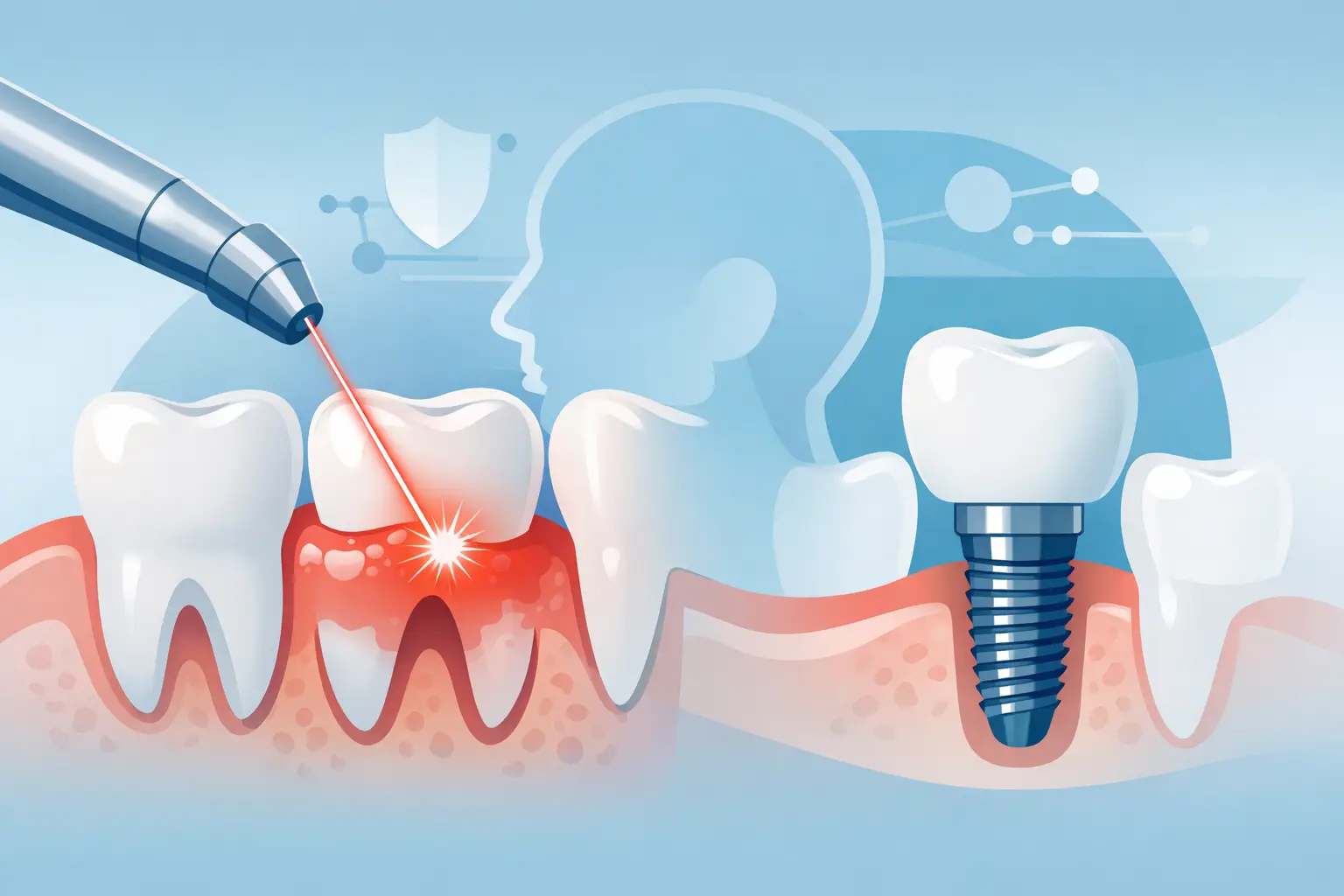
A periodontal treatment plan should do more than make your gums look better for a few weeks. It should address infection beneath the gumline, protect the bone supporting your teeth, and give you the best chance of keeping your natural smile. Laser dentistry can be a valuable part of that plan when it is selected for the right diagnosis and performed by a trained periodontal specialist.
For patients facing bleeding gums, persistent bad breath, gum recession, loose teeth, or concerns around dental implants, the word “laser” can sound either reassuring or unfamiliar. The technology is precise, but it is not a shortcut or a one-size-fits-all answer. Its value comes from how it is used: as part of a carefully planned approach to periodontal health, tissue preservation, and long-term function.
What laser dentistry does in periodontal care
Dental lasers use concentrated light energy to interact with specific tissues. In periodontal treatment, certain lasers can help remove diseased tissue, reduce bacteria in periodontal pockets, and support the body’s healing response while preserving as much healthy tissue as possible.
Traditional periodontal care remains essential. A thorough exam, periodontal charting, diagnostic imaging, professional hygiene, and meticulous home care are the foundation of treatment. When deeper pockets, inflammation, or bone loss are present, a laser may be used alongside scaling and root planing or surgical therapy, depending on the condition of the gums and bone.
LANAP, which stands for Laser-Assisted New Attachment Procedure, is one laser-based approach used for periodontal disease. Rather than cutting away broad sections of gum tissue, the laser is designed to target diseased tissue and bacteria within the pocket around the tooth. The root surface is then carefully cleaned to remove hardened deposits, and the area is treated to encourage the gum tissue to reattach more closely to the tooth.
This is clinically different from simply “zapping” an infection away. Gum disease is a complex bacterial and inflammatory condition that can damage the ligament and bone holding teeth in place. Successful care requires a precise diagnosis, disciplined cleaning of the root surfaces, and a maintenance plan after active treatment.
When laser dentistry may be recommended
The right treatment depends on the stage and pattern of periodontal disease. A patient with early gum inflammation may only need professional cleaning, improved home care, and regular monitoring. Someone with deep periodontal pockets, bleeding, bone loss, or progressive attachment loss may need more advanced treatment.
Laser therapy may be considered when a patient has moderate to severe periodontal disease and wants an approach that may reduce the need for conventional gum surgery. It can also be appropriate for people who are anxious about surgical treatment, provided their oral and overall health make them a suitable candidate.
For implant patients, laser-based treatment may have a role in selected cases of inflammation around an implant. This condition, often called peri-implant mucositis, affects the soft tissue. More advanced disease, known as peri-implantitis, can involve bone loss and requires careful specialist evaluation. The type of implant, its surface, the extent of bone loss, the position of the implant, and the restoration design all influence treatment decisions.
LAPIP, or Laser-Assisted Peri-Implantitis Procedure, may be considered for certain failing implant situations. However, no responsible specialist should promise that every implant can be saved with a laser. Some implants require regenerative treatment, restorative changes, or removal when disease and structural damage are too advanced. The goal is always to preserve healthy tissue and make the most predictable long-term choice.
Potential benefits and realistic trade-offs
Many patients ask whether laser treatment hurts less than traditional periodontal surgery. Individual experiences differ, but laser-assisted procedures can often be performed with less tissue disruption than conventional approaches. This may mean less bleeding, swelling, and postoperative discomfort for some patients, as well as a more comfortable recovery.
Other potential benefits include precise treatment of diseased pocket tissue and the ability to preserve more healthy gum tissue. Because periodontal lasers can be selective in how they interact with tissue, they may support a conservative approach when the diagnosis is appropriate.
Still, less invasive does not mean less serious. Periodontal disease can progress quietly, and treatment cannot replace the daily work of controlling bacterial buildup at home. Brushing thoroughly, cleaning between teeth, keeping maintenance visits, and managing health factors such as smoking and uncontrolled diabetes remain central to a lasting result.
There are also cases where traditional periodontal surgery offers better access to defects in the bone, complex root anatomy, or areas that need grafting and regeneration. A skilled periodontist does not choose a treatment because it is newer or sounds more comfortable. The choice should reflect what gives the tooth, implant, and surrounding tissues the best prognosis.
What to expect at a laser periodontal appointment
Your first visit should begin with a complete assessment, not a treatment pitch. Your periodontist will review your medical history, medications, symptoms, dental records, and imaging. They will measure pocket depths around each tooth, check for bleeding and recession, evaluate tooth mobility, and look closely at the level and pattern of bone support.
If laser therapy is appropriate, the procedure is generally completed with local anesthesia. Sedation may also be an option for patients with significant dental anxiety or those receiving more extensive care. The exact sequence depends on the procedure, but treatment may include using the laser within the periodontal pocket, removing deposits from the root surfaces, and allowing the tissue to stabilize around the teeth.
Afterward, patients receive specific instructions about eating, brushing, activity, and follow-up visits. Some tenderness is expected, and the healing period requires patience. Follow-up care is not optional: periodontal measurements and professional maintenance help confirm that inflammation is resolving and allow your specialist to respond early if a problem returns.
Why specialist training matters
A laser is a clinical instrument, not a diagnosis. The outcome depends on the clinician’s ability to distinguish inflammation from irreversible tissue loss, identify teeth with a poor prognosis, and recognize when regenerative or surgical treatment is the wiser path.
A board-certified periodontist brings focused training in the gums, bone, supporting structures of the teeth, and dental implants. That expertise matters when treatment involves advanced infection, bone loss, recession, compromised implants, or decisions that could affect whether a tooth can be preserved.
At Bita Farhoumand, DDS, laser-based periodontal treatment is considered within a broader specialty plan. That may include non-surgical therapy, LANAP, regenerative grafting, implant care, or conventional periodontal surgery. The recommendation should be based on the health of your tissues and the stability of your result, not on a single technology.
Common questions about laser dentistry
Is laser treatment a cure for gum disease?
Gum disease can be controlled, but patients remain susceptible to recurrence. Laser treatment can reduce disease activity and help support healing, yet ongoing maintenance and consistent home care are necessary to protect the result.
Can laser dentistry replace scaling and root planing?
Not usually. Removing plaque and calculus from root surfaces is a critical part of periodontal treatment. Laser therapy may complement this work, but it does not eliminate the need for thorough mechanical cleaning.
Is laser treatment safe around dental implants?
It can be used in carefully selected circumstances, but implant treatment requires particular caution. Different laser settings and treatment methods may be appropriate depending on the implant surface and the disease present. An implant should be evaluated by a clinician experienced in peri-implant disease before treatment begins.
Will insurance cover laser gum treatment?
Coverage varies by plan and by the procedure performed. A treatment coordinator can help review anticipated benefits, but clinical decisions should be based first on what your periodontal condition requires.
If your gums bleed when you brush, your teeth feel less stable, or an implant has become tender or inflamed, waiting can allow a manageable problem to become more complex. A comprehensive periodontal evaluation can clarify what is happening beneath the gumline and identify the most conservative, effective path forward.
Quick Links
Helpful Articles
article_category: products
article_category: psychiatry
article_category: faqs
article_category: cats
article_category: general
article_category: services
article_category: technology
article_category: dogs
article_category: restorative
article_category: vision therapy
article_category: contact lenses
article_category: health
article_category: conditions
article_category: eye surgery co-management
article_category: exotic
article_category: cosmetic
article_category: surgical procedures
article_category: aesthetics
article_category: preventative
article_category: ocular disease management
article_category: eyeglasses
article_category: eye health
article_category: large animal
[]
article_category: psychiatry
article_category: faqs
article_category: cats
article_category: general
article_category: services
article_category: technology
article_category: dogs
article_category: restorative
article_category: vision therapy
article_category: contact lenses
article_category: health
article_category: conditions
article_category: eye surgery co-management
article_category: exotic
article_category: cosmetic
article_category: surgical procedures
article_category: aesthetics
article_category: preventative
article_category: ocular disease management
article_category: eyeglasses
article_category: eye health
article_category: large animal
[]
Flowbite is an open-source library of interactive components built on top of Tailwind CSS including buttons, dropdowns, modals, navbars, and more.
Check out this guide to learn how to get started and start developing websites even faster with components on top of Tailwind CSS.
All Dental Services
We offer a wide variety of dental services to the Encinitas community. Contact us with any questions about our services.

Keep In Touch
For non-urgent questions or to learn more about our services, contact us today!
© 2026 Bita Farhoumand, DDS. All rights Reserved - Accessibility Statement - Privacy Policy - Sitemap
Managed and Designed by 