
Periodontist vs General Dentist: Which Is Right?
Blog:Periodontist vs General Dentist: Which Is Right?
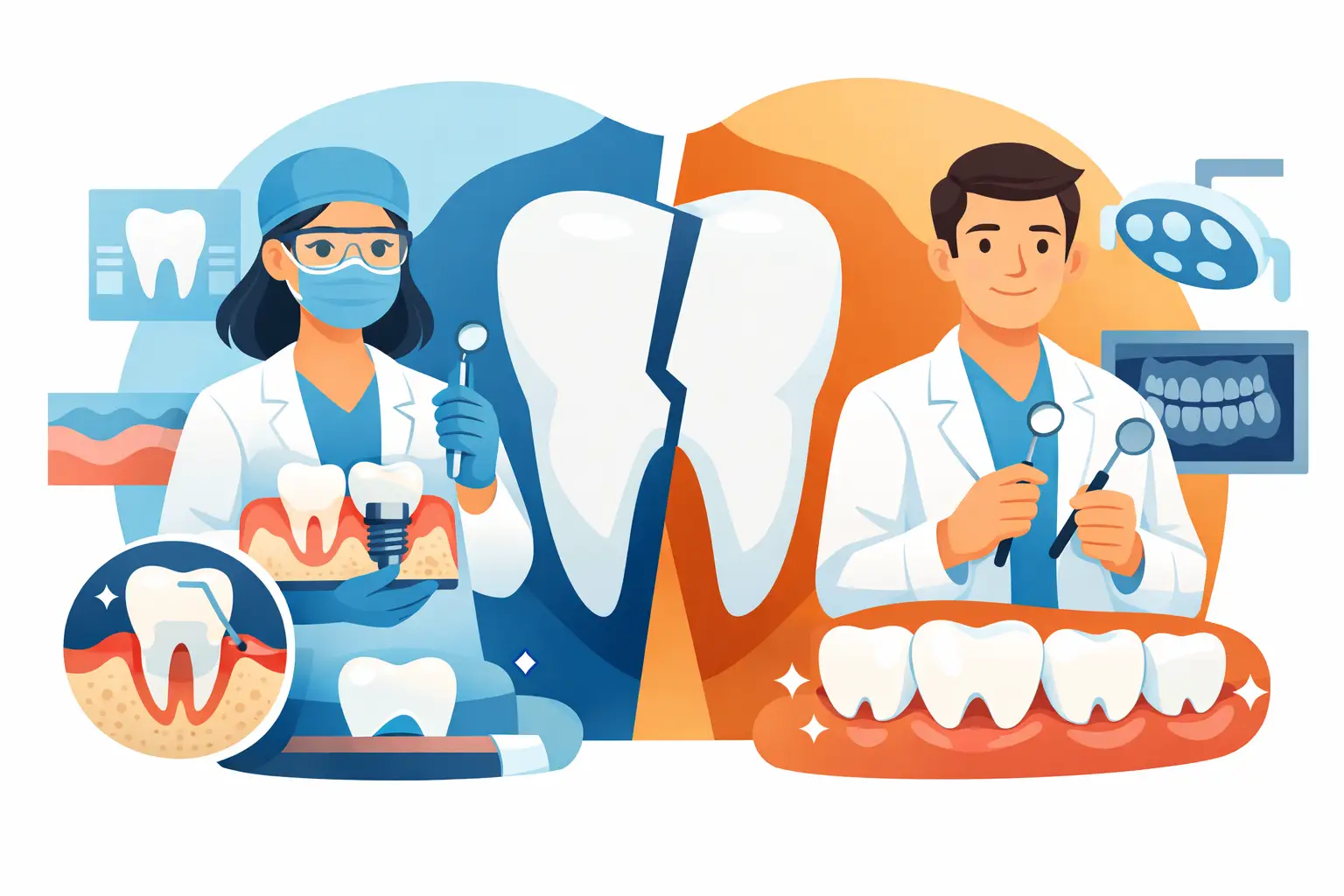
A recommendation to see a specialist can feel unsettling, especially when you are already concerned about bleeding gums, loose teeth, bone loss, or a missing tooth. In the question of a periodontist vs general dentist, the answer is not that one provider is better than the other. Each plays a distinct role in protecting your oral health, and they often work together to provide the strongest long-term result.
A general dentist is the primary provider for routine dental care. A periodontist is a dental specialist focused on the gums, bone, and supporting structures that keep teeth and dental implants stable. When a problem becomes more complex, a periodontist brings advanced training, surgical expertise, and technology designed for precision treatment.
Periodontist vs. General Dentist: The Core Difference
Think of your general dentist as the clinician who helps keep your smile healthy over time. Regular exams, cleanings, fillings, crowns, and early detection are all essential parts of general dentistry. Your dentist monitors changes in your mouth and can often manage mild gum inflammation before it progresses.
A periodontist focuses on the foundation beneath the visible teeth. This includes the gum tissue, periodontal ligament, and jawbone. Periodontists diagnose and treat periodontal disease, gum recession, bone loss, and conditions affecting dental implants. They also place implants and perform procedures that rebuild the bone and tissue needed to support a healthy, natural-looking smile.
The distinction matters because gum disease is not only a surface issue. Once bacteria have damaged the attachment between the tooth, gum, and bone, routine care alone may no longer be enough. Specialized treatment may be needed to stop progression, preserve teeth, and create a stable foundation for future restorative work.
Training and Expertise Beyond Dental School
Both general dentists and periodontists complete dental school. A periodontist then completes additional specialty training focused on the prevention, diagnosis, and treatment of periodontal disease and the placement of dental implants. This advanced education includes surgical treatment, regeneration of lost bone and tissue, management of complex implant cases, and techniques for treating periodontal infections.
Board certification adds another meaningful layer of assurance. A Board-Certified periodontist has met rigorous standards established by the American Board of Periodontology, demonstrating advanced knowledge and commitment to the specialty. For patients facing surgery, significant bone loss, failing implants, or a recommendation for extraction, that depth of training can be especially valuable.
Specialty care is also highly individualized. Two patients may both have gum recession, for example, but require very different treatment plans based on their bone level, bite, tissue thickness, health history, and cosmetic goals. A periodontist evaluates these details before recommending the most appropriate path forward.
When a General Dentist Is the Right Choice
Most ongoing dental needs begin with a general dentist. Routine preventive visits allow your dentist to identify cavities, early gum inflammation, worn restorations, and changes in your oral health before they become more serious. A general dentist may also provide periodontal maintenance and nonsurgical care for mild or stable gum conditions.
If your gums are slightly inflamed because plaque has accumulated near the gumline, a professional cleaning and improved home care may resolve the issue. General dentists also restore teeth after specialty treatment, including placing crowns or bridges once the gums and bone are healthy enough to support them.
Your general dentist is not separate from specialty care. In many cases, they are the first person to identify a concern and refer you to a periodontist at the right time. That collaboration helps ensure every phase of care supports the next one.
When to See a Periodontist
A referral to a periodontist does not automatically mean you will need surgery. It means your condition deserves a more focused evaluation. A periodontist can determine whether conservative treatment is appropriate or whether advanced therapy offers the best chance of preserving your oral health.
Gum Disease That Has Progressed Below the Gumline
Persistent bleeding, deep periodontal pockets, chronic bad breath, gum tenderness, and teeth that appear longer can all point to periodontal disease. As the infection progresses, it can destroy bone around the teeth. Scaling and root planing may be recommended to remove bacteria and hardened deposits beneath the gumline. For more advanced disease, laser-assisted treatment or periodontal surgery may be considered.
LANAP laser gum therapy is one example of a specialized approach. It uses laser technology to target diseased tissue and bacteria while helping preserve healthy tissue. Whether LANAP or another treatment is appropriate depends on the severity and pattern of disease, not simply on a patient’s preference for a particular procedure.
Gum Recession and Exposed Roots
Receding gums can make teeth look longer and leave roots vulnerable to sensitivity, decay, and further damage. Recession may result from periodontal disease, aggressive brushing, thin gum tissue, bite forces, or past orthodontic treatment. A periodontist can identify the cause and determine whether soft-tissue grafting or another approach may protect the tooth and improve comfort.
Bone Loss, Missing Teeth, and Dental Implants
Dental implants depend on sufficient, healthy bone and stable gum tissue. If bone has been lost after an extraction, years of missing teeth, infection, or gum disease, grafting may be needed before or during implant treatment. A periodontist plans implant placement with attention to bone volume, tissue contours, bite forces, and the long-term ability to clean around the implant.
This is particularly important when replacing several teeth or considering implant-supported dentures or All-on-4 treatment. The treatment plan should account for function as carefully as appearance. A beautiful restoration cannot perform well if the underlying bone and tissue are not adequately supported.
A Failing Implant or a Tooth Considered for Extraction
Bleeding around an implant, swelling, discomfort, pus, or a loose implant should be evaluated promptly. Peri-implant disease can cause bone loss around an implant and may threaten its stability. Not every failing implant can be saved, but early specialty treatment may expand the available options.
The same is true for natural teeth. When you have been told a tooth needs to be removed, a periodontal evaluation can clarify whether the tooth is truly beyond repair or whether regenerative treatment could help preserve it. The right choice depends on the prognosis, infection, remaining bone, crack patterns, and the role that tooth plays in your overall bite.
What Happens During a Periodontal Evaluation?
A periodontal evaluation is more comprehensive than simply looking for bleeding gums. The specialist measures periodontal pocket depths, checks for gum recession and tooth mobility, evaluates bite forces, and reviews X-rays or three-dimensional imaging when needed. For implant patients, the evaluation also considers the condition of the surrounding bone and soft tissue.
This process provides the information needed to recommend treatment with confidence. Some patients need nonsurgical therapy and closer maintenance. Others may benefit from laser treatment, bone grafting, tissue grafting, implant placement, or surgical care. The goal is never to recommend more treatment than necessary. It is to address the underlying problem rather than apply a temporary cosmetic fix.
For patients who feel anxious about procedures, comfort planning is part of quality care. Local anesthesia, sedation options, clear explanations, and a compassionate pace can make advanced treatment feel more manageable.
Choosing Between a Periodontist and a General Dentist
Start with the nature of your concern. For preventive care, routine restoration, or a new dental problem without signs of advanced gum disease, your general dentist is usually the right first call. If you have diagnosed periodontal disease, visible recession, bone loss, a complex implant need, or a recommendation for periodontal surgery, a periodontist is equipped to provide specialized assessment and treatment.
It is also reasonable to seek a periodontal consultation when you want greater clarity before making a major decision. This can be helpful if you have received different recommendations, are concerned about losing a tooth, or have had an implant that does not feel right. A specialist can explain the condition, the realistic treatment options, and the expected long-term outlook.
At Bita Farhoumand, DDS, board-certified periodontal and implant care is centered on precision, comfort, and preserving healthy smiles whenever possible. The focus is not just on treating what is visible today, but on building a healthier foundation for the years ahead.
If your gums, bone, or implants are sending warning signs, timely evaluation can make a meaningful difference. The best next step is the one that gives you a clear diagnosis and a plan designed to protect what matters most: your health, function, and confidence in your smile.
Quick Links
Helpful Articles
article_category: products
article_category: psychiatry
article_category: faqs
article_category: cats
article_category: general
article_category: services
article_category: technology
article_category: dogs
article_category: restorative
article_category: vision therapy
article_category: contact lenses
article_category: health
article_category: conditions
article_category: eye surgery co-management
article_category: exotic
article_category: cosmetic
article_category: surgical procedures
article_category: aesthetics
article_category: preventative
article_category: ocular disease management
article_category: eyeglasses
article_category: eye health
article_category: large animal
[]
article_category: psychiatry
article_category: faqs
article_category: cats
article_category: general
article_category: services
article_category: technology
article_category: dogs
article_category: restorative
article_category: vision therapy
article_category: contact lenses
article_category: health
article_category: conditions
article_category: eye surgery co-management
article_category: exotic
article_category: cosmetic
article_category: surgical procedures
article_category: aesthetics
article_category: preventative
article_category: ocular disease management
article_category: eyeglasses
article_category: eye health
article_category: large animal
[]
Flowbite is an open-source library of interactive components built on top of Tailwind CSS including buttons, dropdowns, modals, navbars, and more.
Check out this guide to learn how to get started and start developing websites even faster with components on top of Tailwind CSS.

All Dental Services
We offer a wide variety of dental services to the Encinitas community. Contact us with any questions about our services.

Keep In Touch
For non-urgent questions or to learn more about our services, contact us today!
© 2026 Bita Farhoumand, DDS. All rights Reserved - Accessibility Statement - Privacy Policy - Sitemap
Managed and Designed by 